
This is the iconic picture from WWII when Eisenhower went to Greenham Common Airfield to chat with 101st Paratroopers evening before drop.

Pictures #9 & 10 are current state of Airfield. These soldiers are from Easy Company.
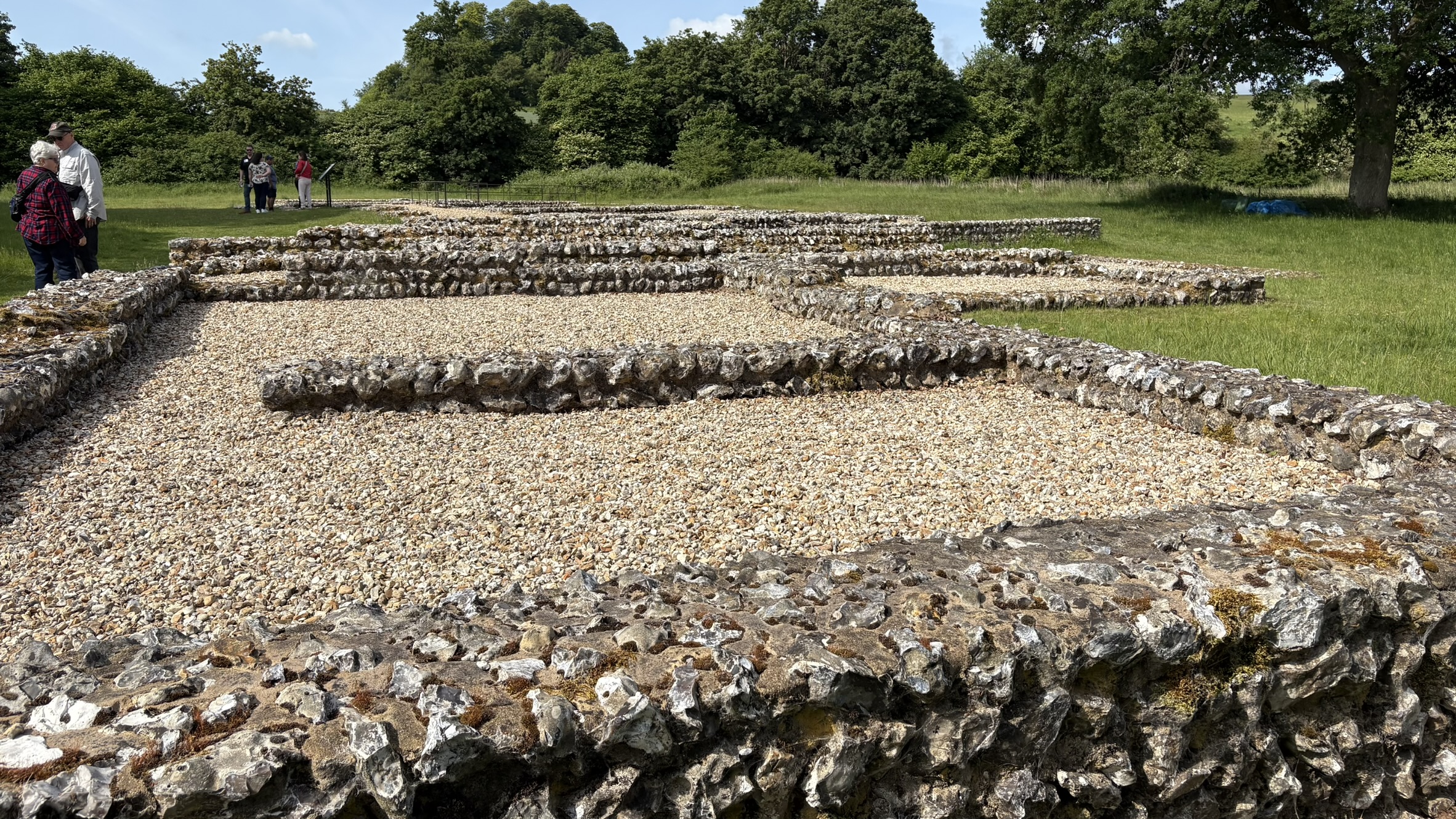
We fortunately arrived early at Littlecote House which was the 506th Regimental HQ in Photo#7. Our historian knew of these Roman ruins of this villa built around AD 290-300. Restored between 1978 and 1991. Originally found in 1727 & buried over. Building is stll rock solid.
Looking at the East Wing. The grand Facade for Visitors. Up ahead is the Sacrarium; Constructed in 360 AD. There is a magnificnet mossaic: Intricately inlaid quadrants of 4 female gods, Aphrodite, Nemesis, Demeter, & Persephone – all arrayed around the prophet Orpheus. https://en.wikipedia.org/wiki/Littlecote_Roman_Villa

Here lies the gatehouse. the most massive gatehouse found in UK. That foundation is solid & stable & something could probably be built on it now.
This is West side, presumed the stable block
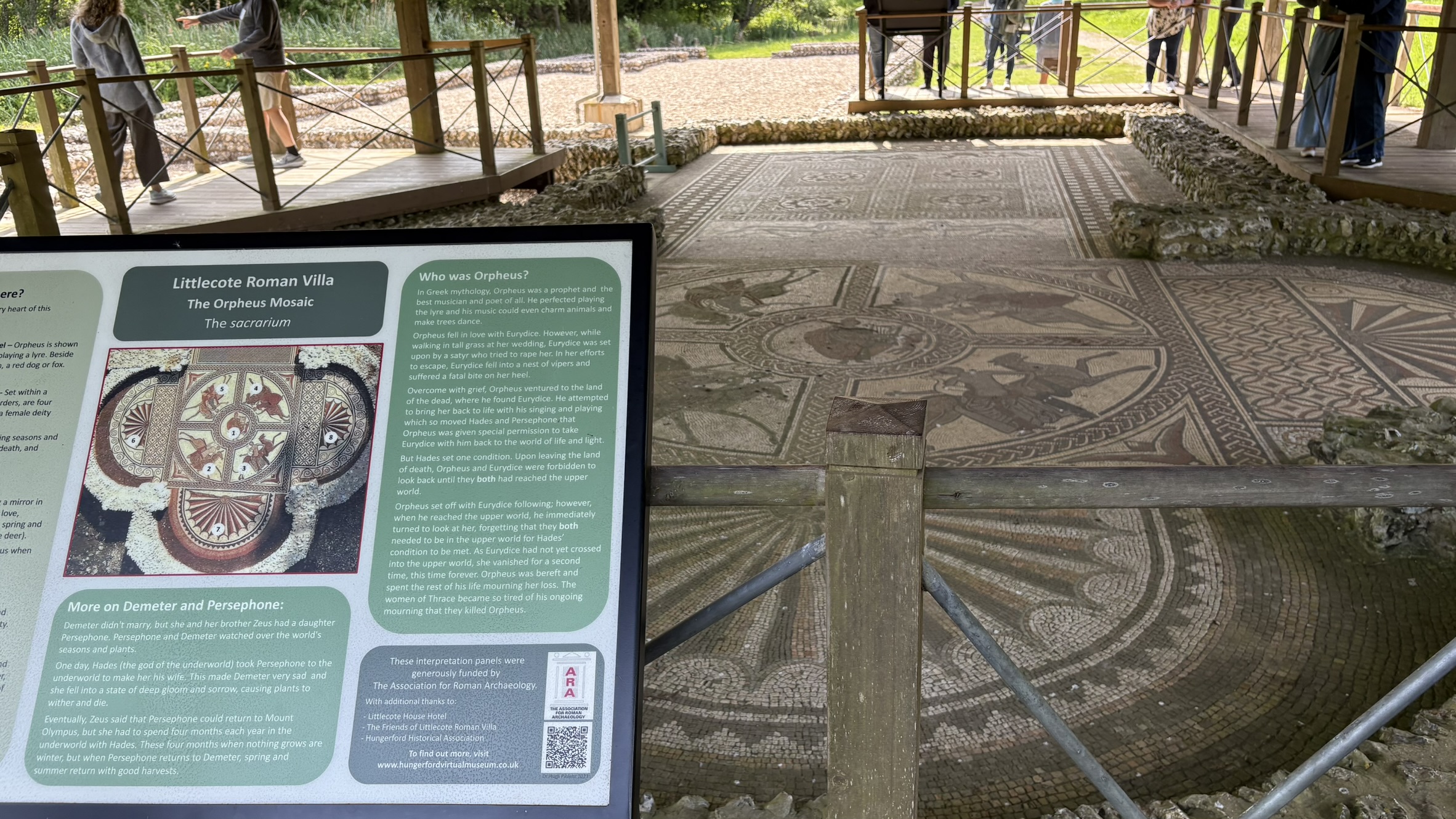
A good look at the mosaic from 360 AD. Created over 1600 years ago.
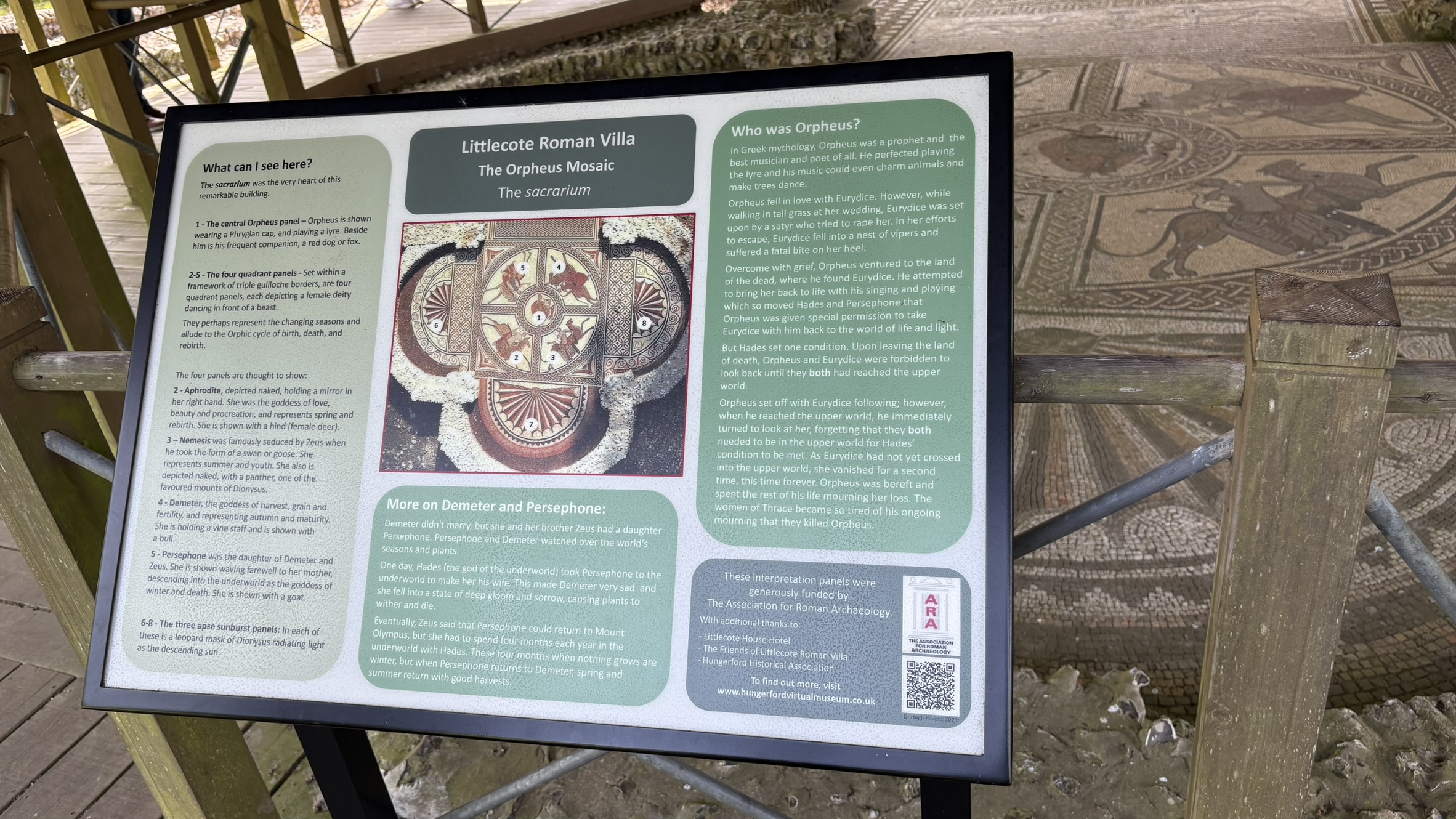
A full view of the writeup re: the mythology.
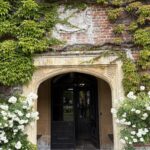
Entrance to the 506th Regt HQ, Colonel Sink. We spent several hours here with a presentation by a local who’s mother was part of the local inteaction with the 506th. Estate requisitioned by UK governemnet for military base including a British tank unit before & 101st later. Very close to the Roman ruins.
This is Aldbourne UK where the regiment was located before the Invasion & for a short time after. A poignant scene in Series#3 where Malarky comes back after D-Day & goes for his laundry he left off before invasion. Has a nice chat with lady but just before he leaves she comes with other bundles several times, not picked up because they died. Series#1, #3, & #4
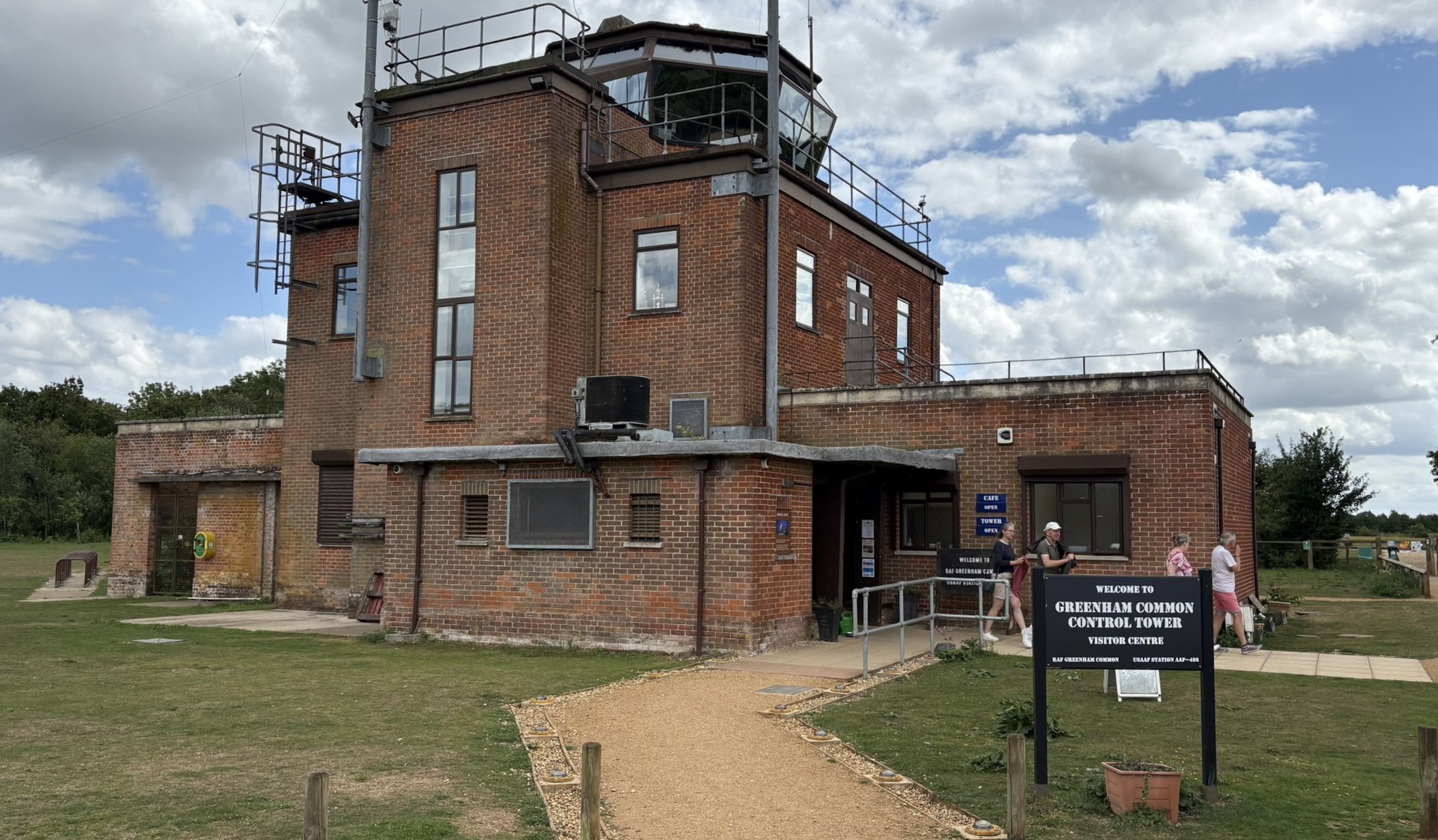
This is the Greenham Common Control Tower, 1 of last remaining buildings. It is now a coffee shop, & museum. Greenham has quite a history from 1942 of World War II, Cold War, & local political protests most recently. See https://en.wikipedia.org/wiki/RAF_Greenham_Common.
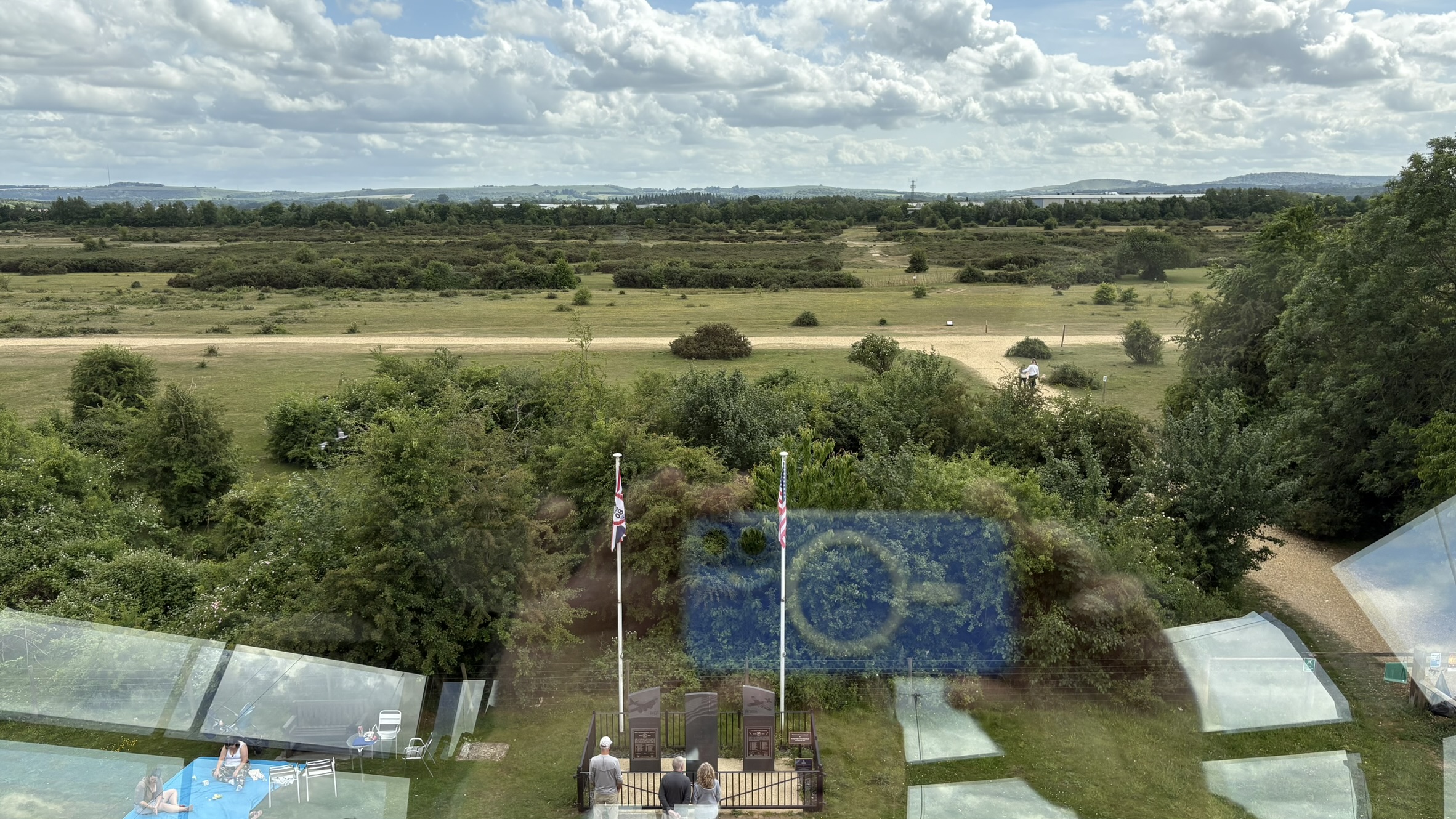
Picture from inside the Greenham Common Control Tower looking at former airfield. Unfortunately it was through a window & you can see my phone.
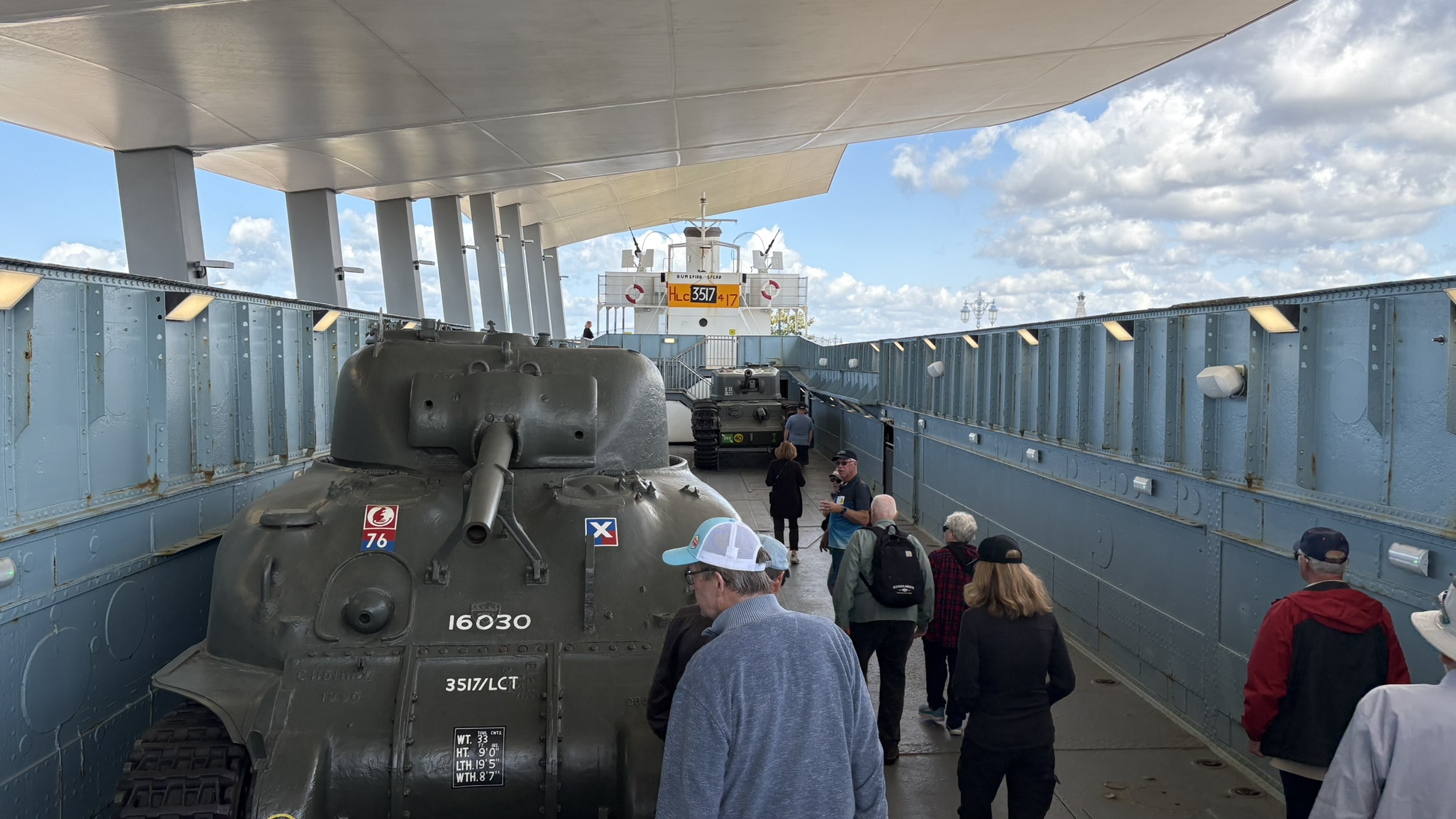
he D-Day Story is the only UK museum dedicated in Portsmouth to telling the events of June 1944, a significant moment in history. The Normandy landings remain the largest seaborne invasion ever seen and a turning point which marked the beginning of the end of the Second World War.The museum includes access onboard Landing Craft Tank 7074, the last surviving LCT to take part in the Normandy campaign. Shown in picture.
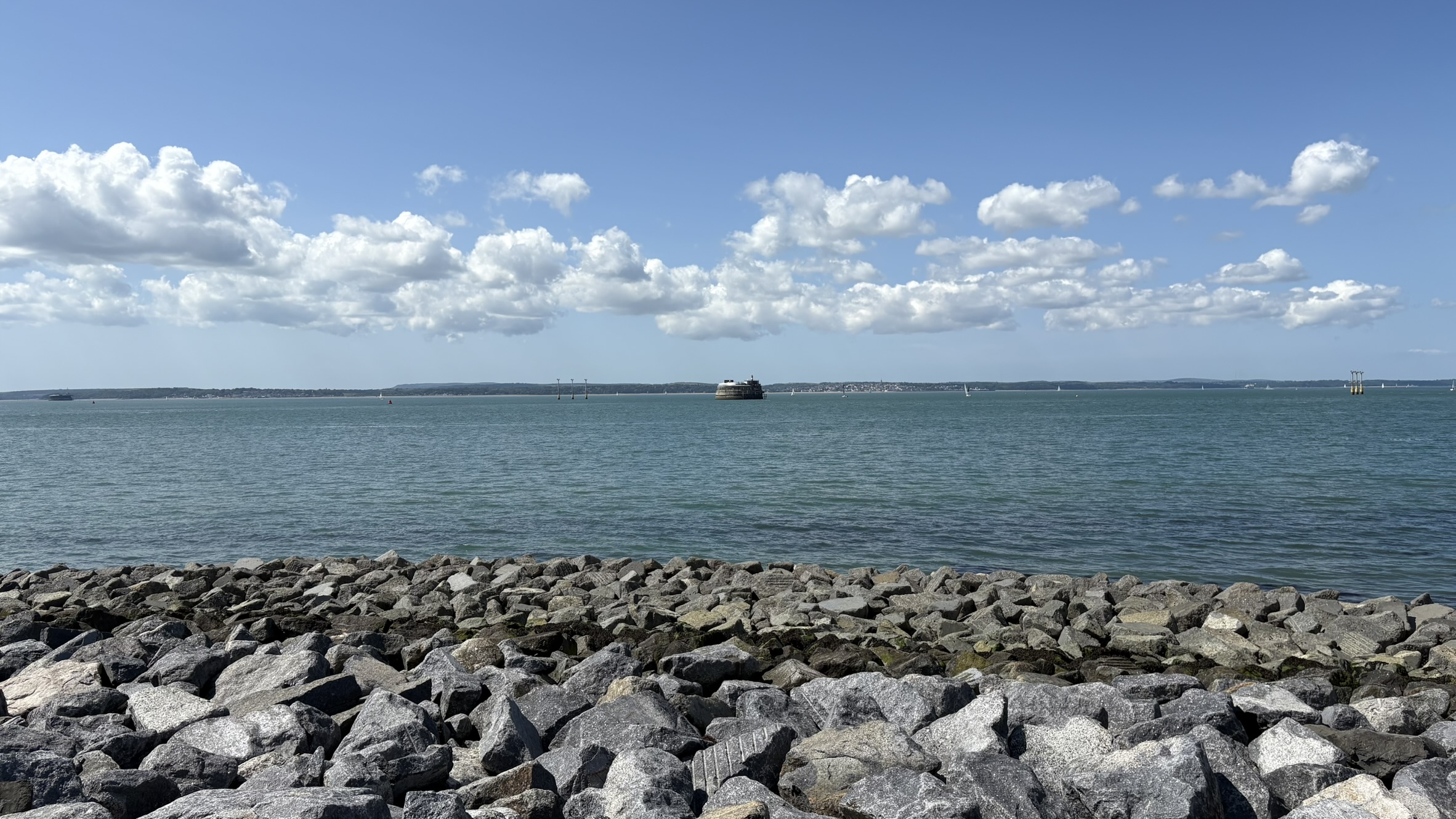
At the very entrance of Portsmouth facing English Channel just west of the D-Day Story in Photo#11.
Southsea Castle sign at Portsmouth entrance improvements made at 1683 that was updated & moved to current site in 1814.
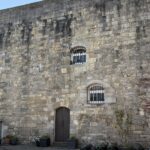
The Southsea Castle at entrance of Portsmouth Harbor.
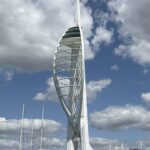
The Spinnaker. Portsmouth residents voted for their favorite tower design. 60% (30,000 people) voted for the Spinnaker Tower over the Globe and Triple Tower, reflecting Portsmouth’s unique maritime history and the harbour’s place as an international location for yachting. The Tower represents a sail billowing in the wind, a design accomplished by using two large, white, sweeping metal arcs, creating a spinnaker sail design. (from inside Harbor)
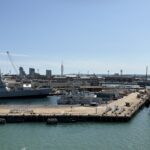
These UK Navy vessels were taken from ferry as we were just leaving. Looks like alot of the fleet.
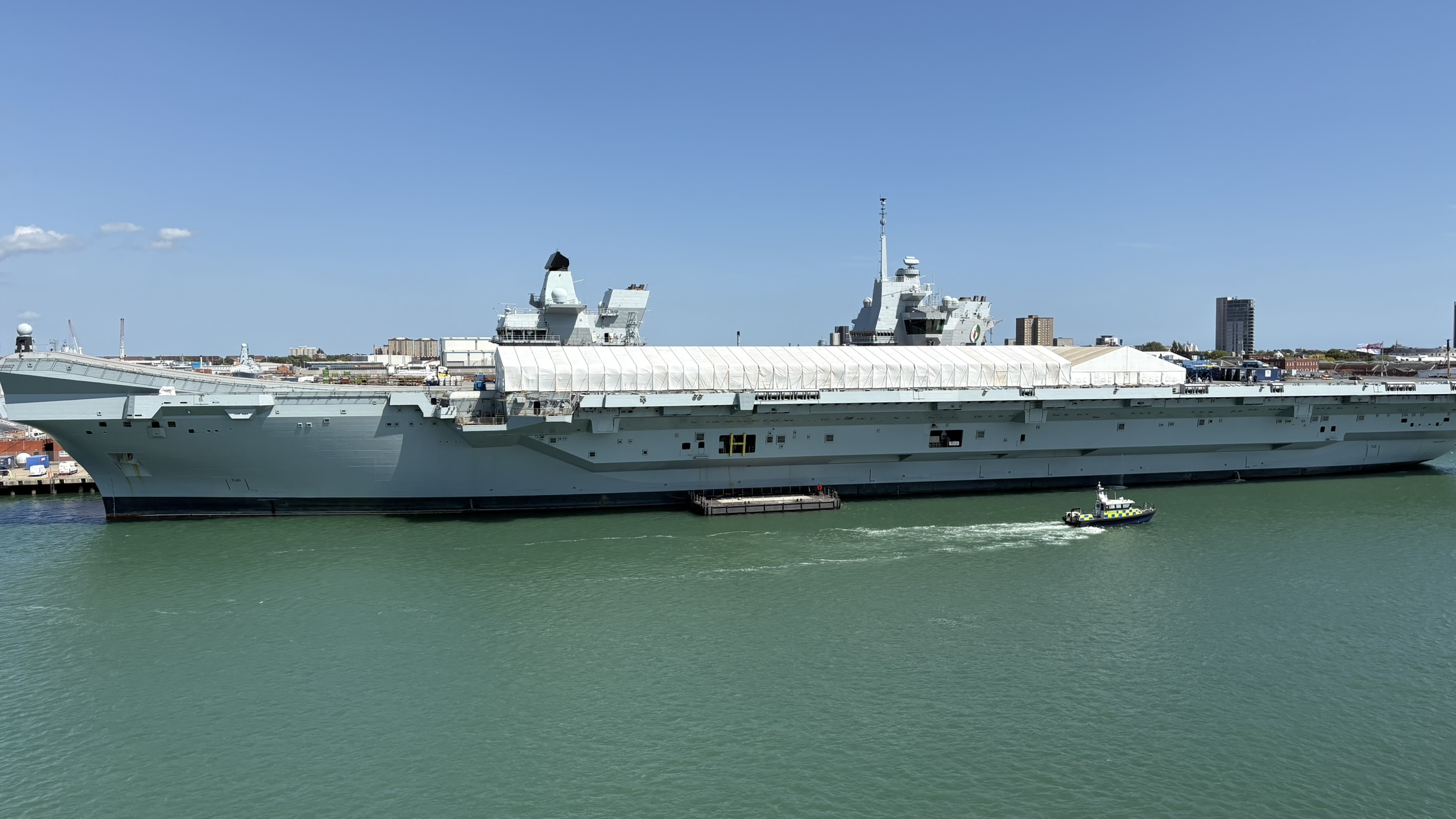
HMS Queen Elizabeth, Pride of the UK fleet. Jump carrier. https://www.msn.com/en-us/video/peopleandplaces/hms-queen-elizabeth-before-undocking-stunning-drone-views/vi-AA1BCwfa?ocid=socialshare. https://www.msn.com/en-us/travel/news/royal-navy-pilots-in-action-advanced-flying-training-revealed/vi-AA1CrMr3?ocid=socialshare
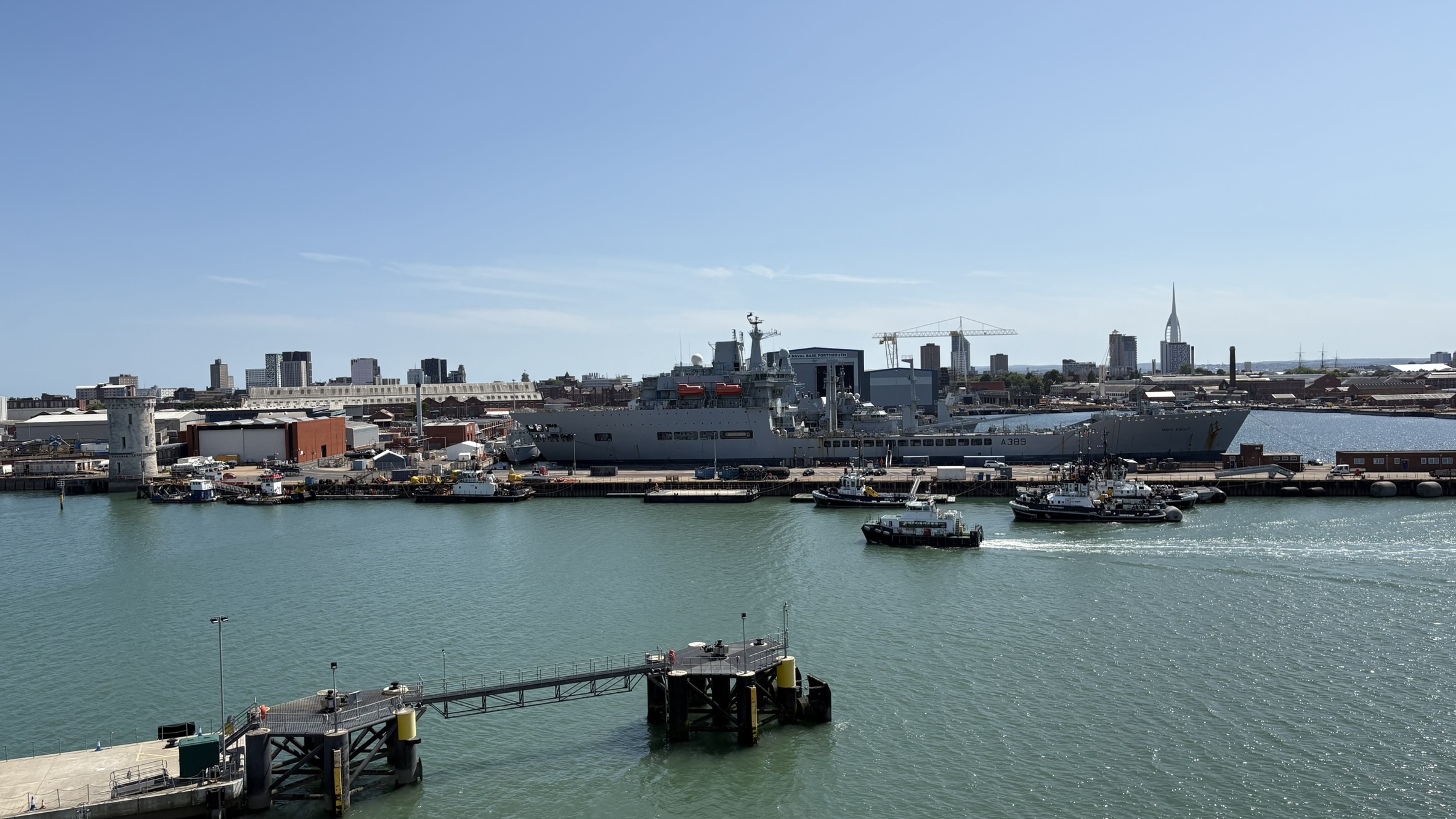
Floating out of the harbor with other Naval Vessels
The Spinnaker. Portsmouth residents voted for their favorite tower design. 60% (30,000 people) voted for the Spinnaker Tower over the Globe and Triple Tower, reflecting Portsmouth’s unique maritime history and the harbour’s place as an international location for yachting. The Tower represents a sail billowing in the wind, a design accomplished by using two large, white, sweeping metal arcs, creating a spinnaker sail design. (While leaving harbor just before the English Channel)
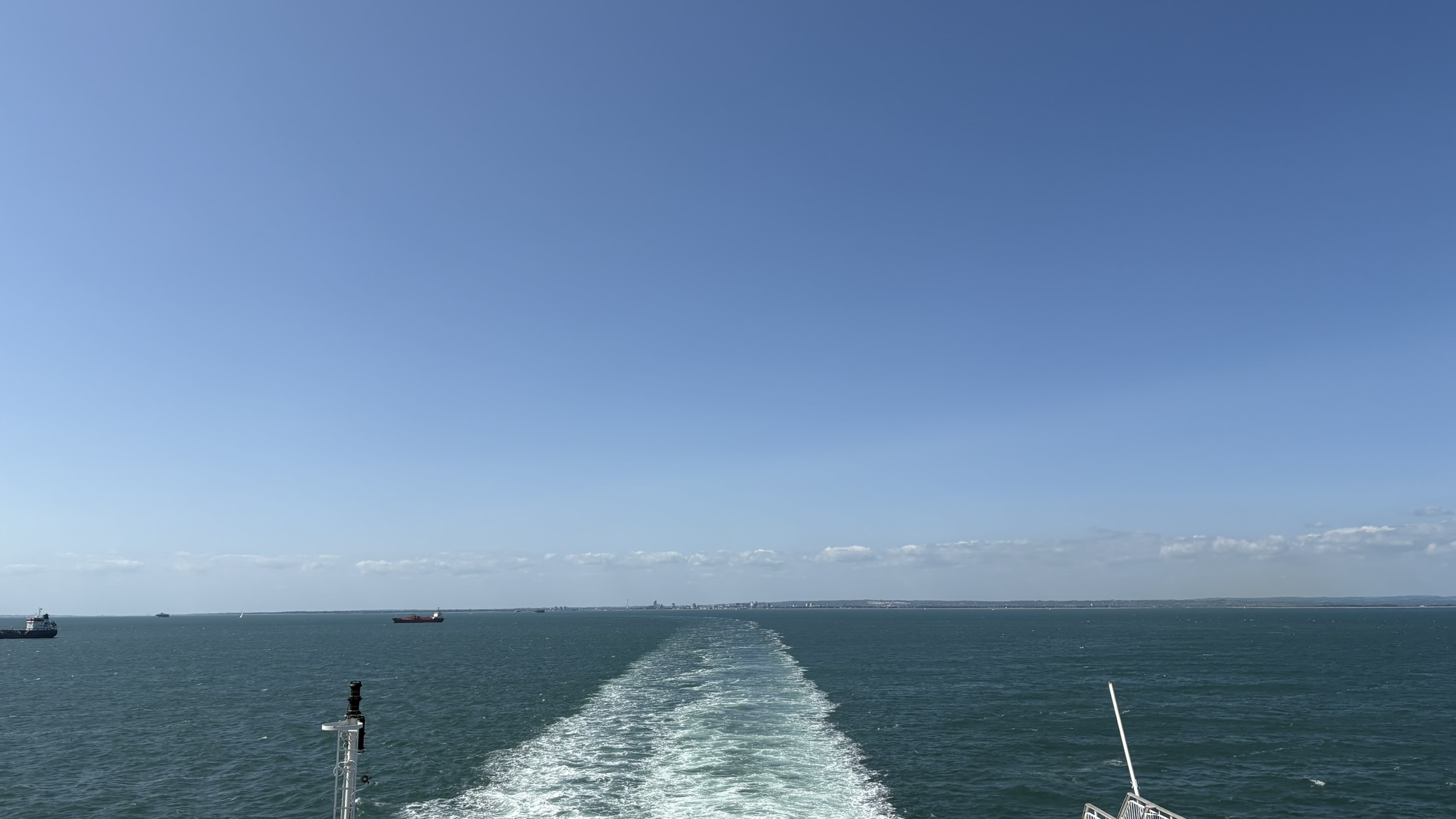
Farewell to Portsmouth & the UK on the English Channel on the way to Ouistreham & then Bayeux. Can you believe I have neither a picture of the ferry nor know the name of it?