
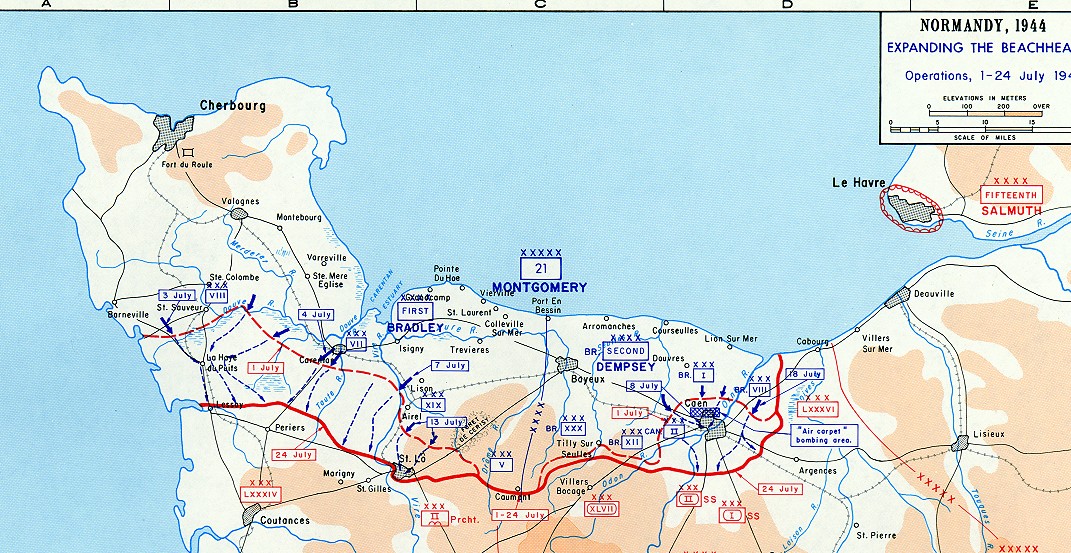
US is in the W-NW sector. My Fathers PT-boat was on picket duty between Ourve River & Cherbourg June to August 1944. Then August – December off Le Harve.This isthmus in Northwest is where 502nd Regt. landed on June 6th. Normandy breakout occurred during Operation Cobra begun on July 25, 1944.

See the Normandy Coast from ferry. It’s 906 PM on June 2. Took awhile to get through Customs & bus to hotel in Bayeux.

Church at St-Mere-Eglise made famous by Red Buttons (AKA Private John Steel, 2nd Battalion, 505th PIR 82nd Abn ) in Longest Day. Both the 101st & 82nd ABN were haphazardly dropped & mingled esp near St-Mere-Eglise. Winters actually moves East of here to Brecourt Manor where he will get Distinguished Service Cross for leading a successful assault on an Artillery site attacking Utah Beach by Exits 2 & 3.
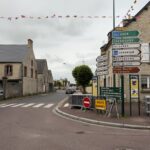
St-Mere-Eglise showing the direction signs for all the main Towns in the initial D-Day assault. The 101st ABN objectives for intial assault was to protect the US Army flanks, control access to Utah Beach exits, & control these transportation hubs.
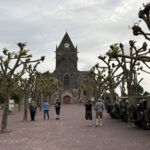
Another view of the church with some interesting trees. See Red Buttons hanging from roof. We were told that roof location was historically inaccurate. Notice the French citizens, military equipment, & my fellow travellers visiting the area some 80 years later. Our visit was on June 3, just before invasion date of June 6th.
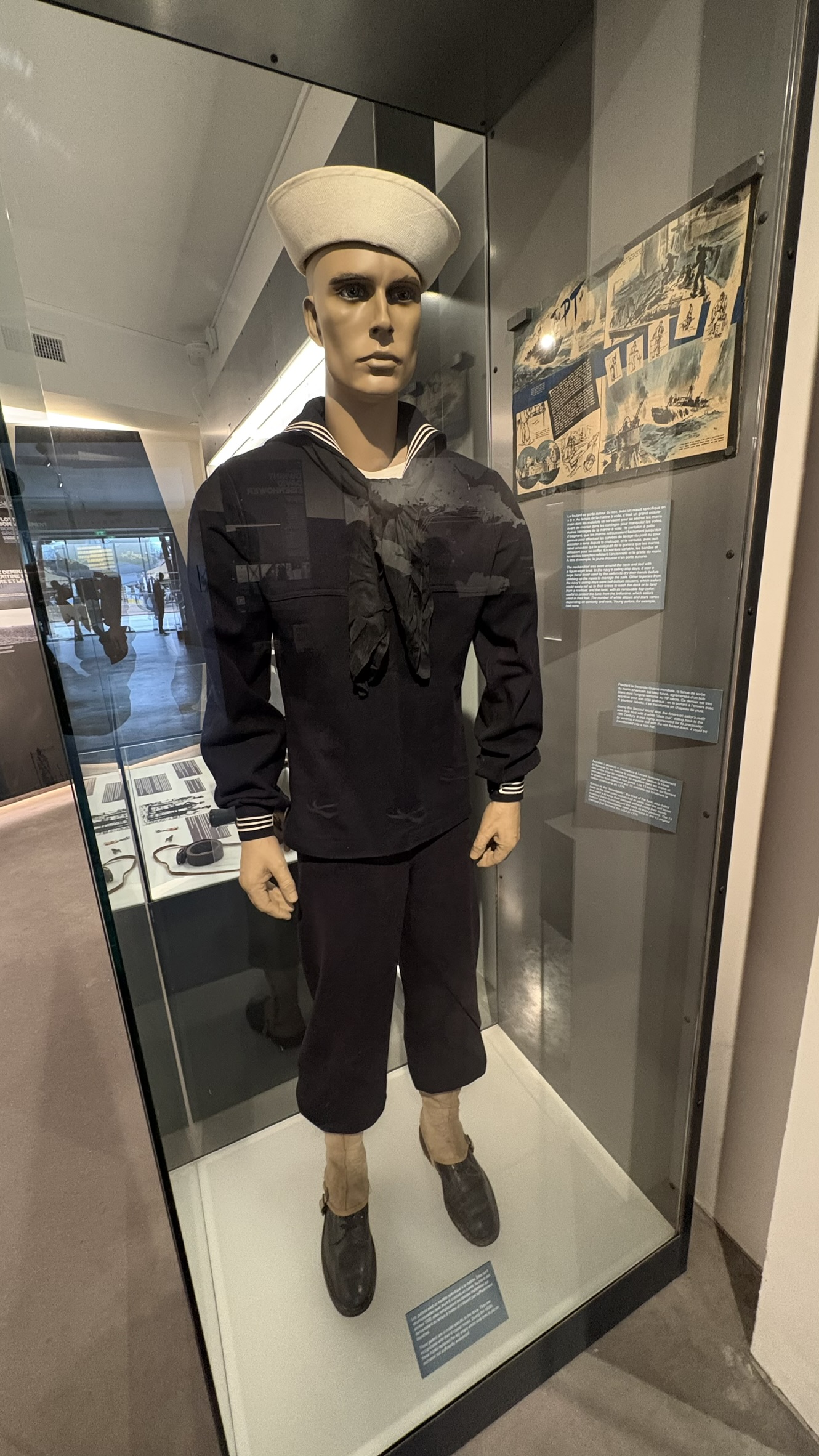
This is the Utah Beach Museum. Much to my surprise they had a substantial (French) Naval display on boats similar to US Elco PT’s. Odd because there is not a port nearby, the US & UK had most small fighting boats in Channel as far as I know. I was so engrossed that the tour Logistics guy had to come get me. Very embarassing to walk into 32 sets of annoyed eyes.
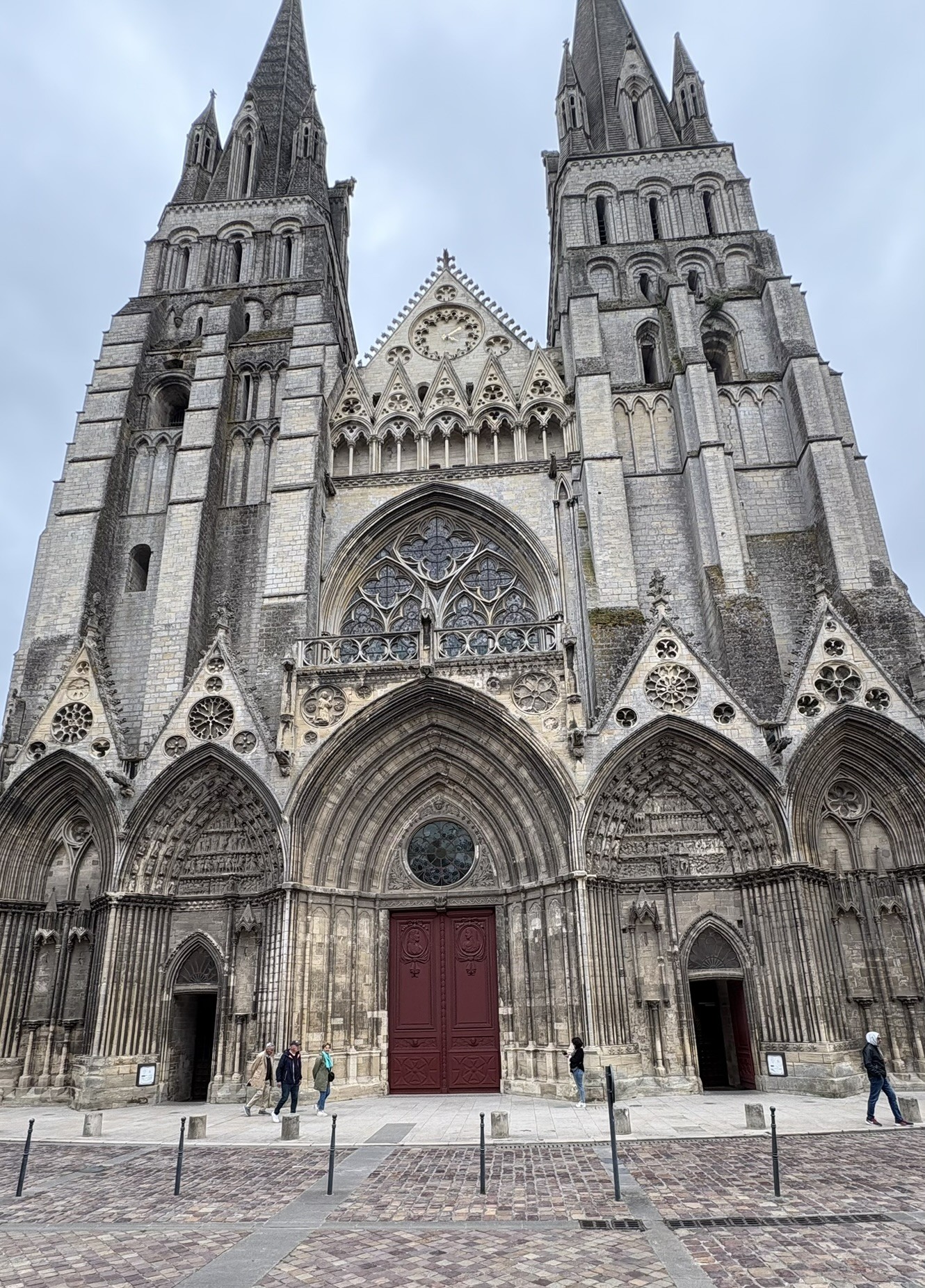
This is Cathedral of Our Lady of Bayeux. The present cathedral was consecrated on 14 July 1077 in the presence of William, Duke of Normandy. Thiis cathedral houses the Bayeux Tapestry (on way to UK as we speak). We did not see it. Long day & we were late getting back.
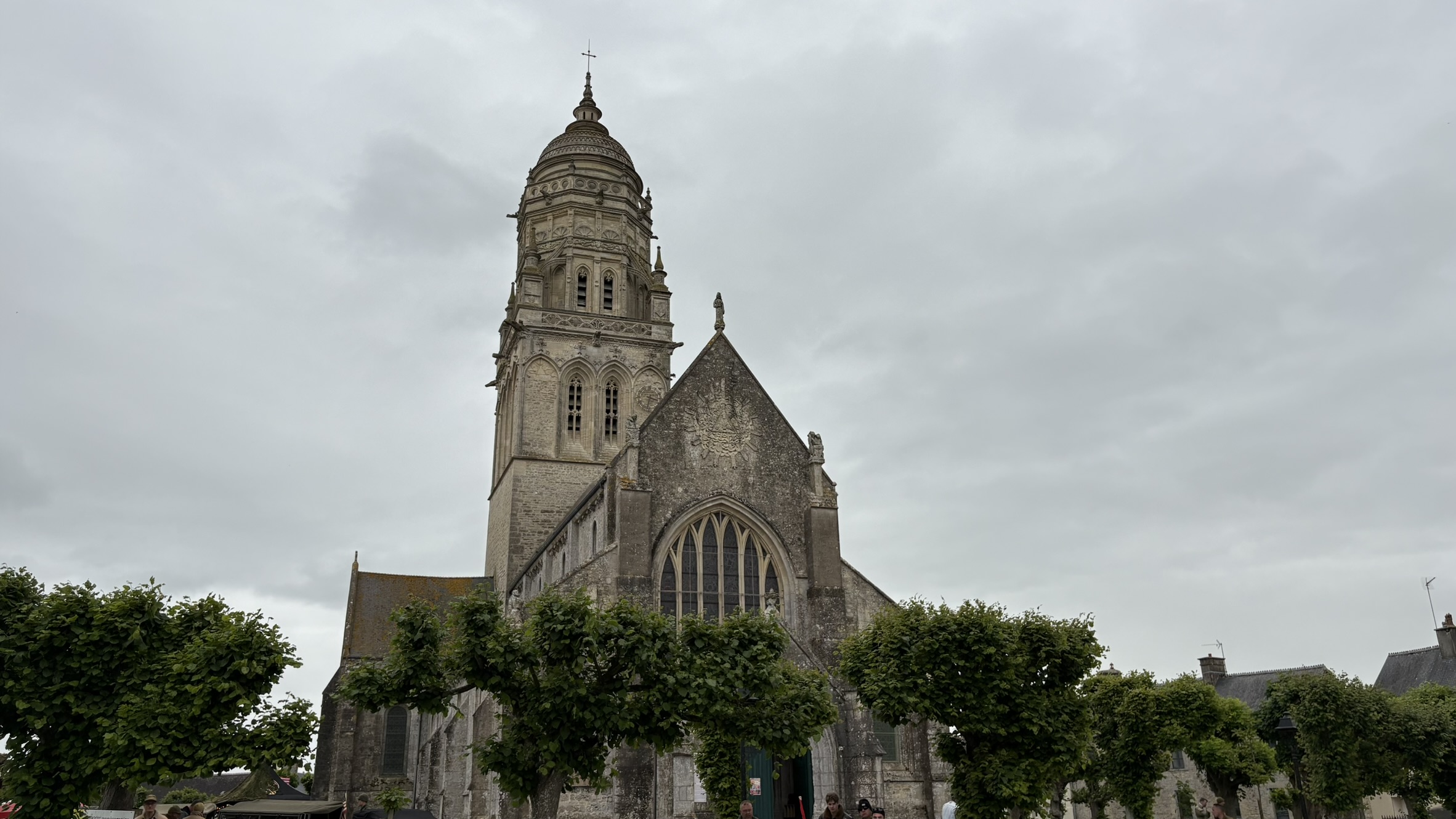
https://youtu.be/gm4SxNrA7Gc. Church at St-Mere-Eglise made famous by Red Buttons (AKA Private John Steel, 2nd Battalion, 505th PIR 82nd Abn ) in Longest Day. Both the 101st & 82nd ABN were haphazardly dropped & mingled esp near St-Mere-Eglise. Winters actually moves East of here to Brecourt Manor where he will get Distinguished Service Cross for leading a successful assault on an Artillery site attacking Utah Beach by Exits 2 & 3.
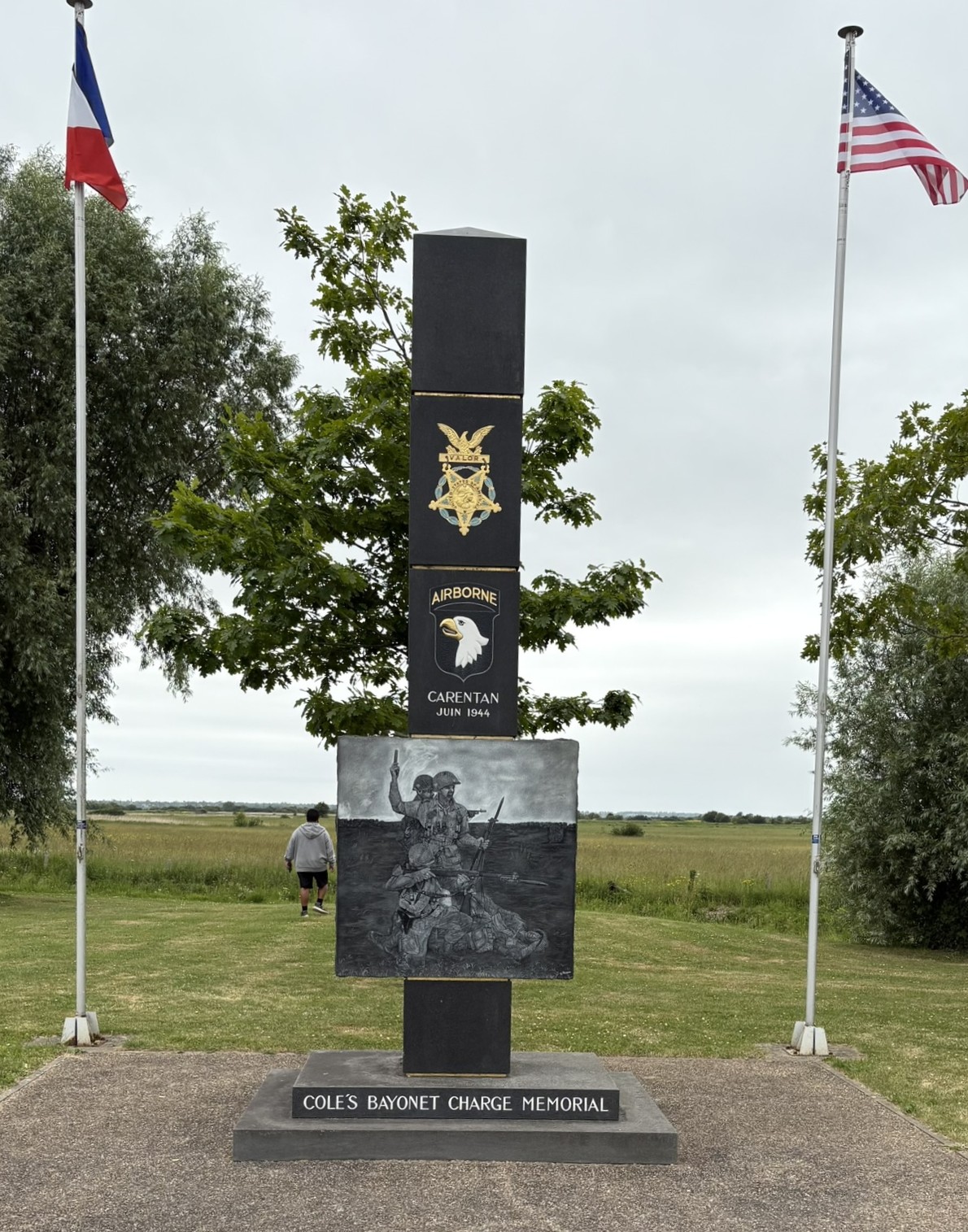
Caretan. Here we diverge from the Winters story. Lt Col Cole commander of the Third Battalion of the 502nd PIR led a bayonet charge toward the town Caretan probably the airbornes most important objective other than facilitating the 4th ID from Utah Beach. This action was vitally important because it was a crossroad between US Utah & Omaha Beach. Cole got Medal of Honor for this. Unfortunately he was killed by a sniper in Market Garden. https://www.warhistoryonline.com/world-war-ii/robert-cole-carentan-bayonet.html

This is the famous location of Dick Winters (If you watched BoB #2) & crew taking out artillery pieces at Brecourt Manor that were threatening Utah Beach exits 2 & 3. There is some contoversey over the details of the event as portrayed in the show & other accounts including from Dick Winters. But all participants of action received medals & Winters received a Distinguised Service Cross, 1 below the Medal of Honor. See https://alchetron.com/Br%C3%A9court-Manor-Assault

This is a memorial to the original Easy Company Commander Lieutenant Meehan & team & airplne crew who perished at this location NE of St-Mere-Eglise. 2nd Battalion was unaware of this for several days. Dick Winters becomes Company Commander when it was confirmed.

This is looking NW from Utah Beach towards general vicinity of Mason Line screening duty of US PT boats. The houses on left look old enough to be there during invasion but no idea. This is problem with going pell mell for 15 days. You see alot but cannot take your time, and ponder nuances. Everythng goes so fast.

This is looking East on Utah Beach in opposite direction. This would be looking at Omaha Beach & Pointe Du Hoc. BTW the latter was an exciting Special Ops bragged at by Reagan on 40th anniversary but in the context of the time it was of minor consequence. It actually turned out to be a resource drain because they had to be rescued from the land side. There is a controversy about what the Rangers accomplished & who gets credit.
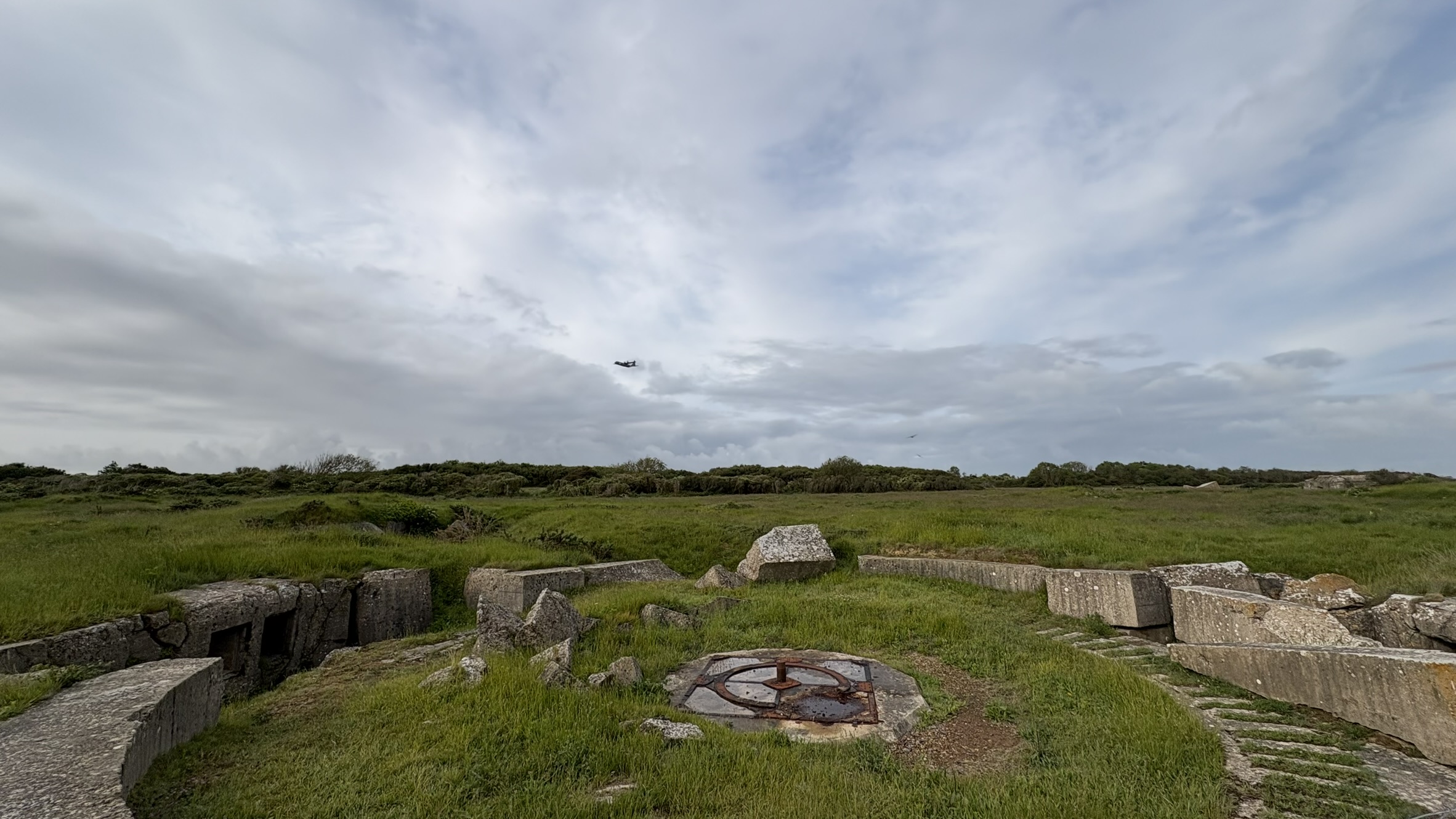
We are at Pointe Du Hoc here. Looking through old gun enplacement.This is June 4th just before the June 6th Commemoration so there was a lot of US Military activity. I met the Commanding General of the 1st ID at our hotel bar here for the festivities.
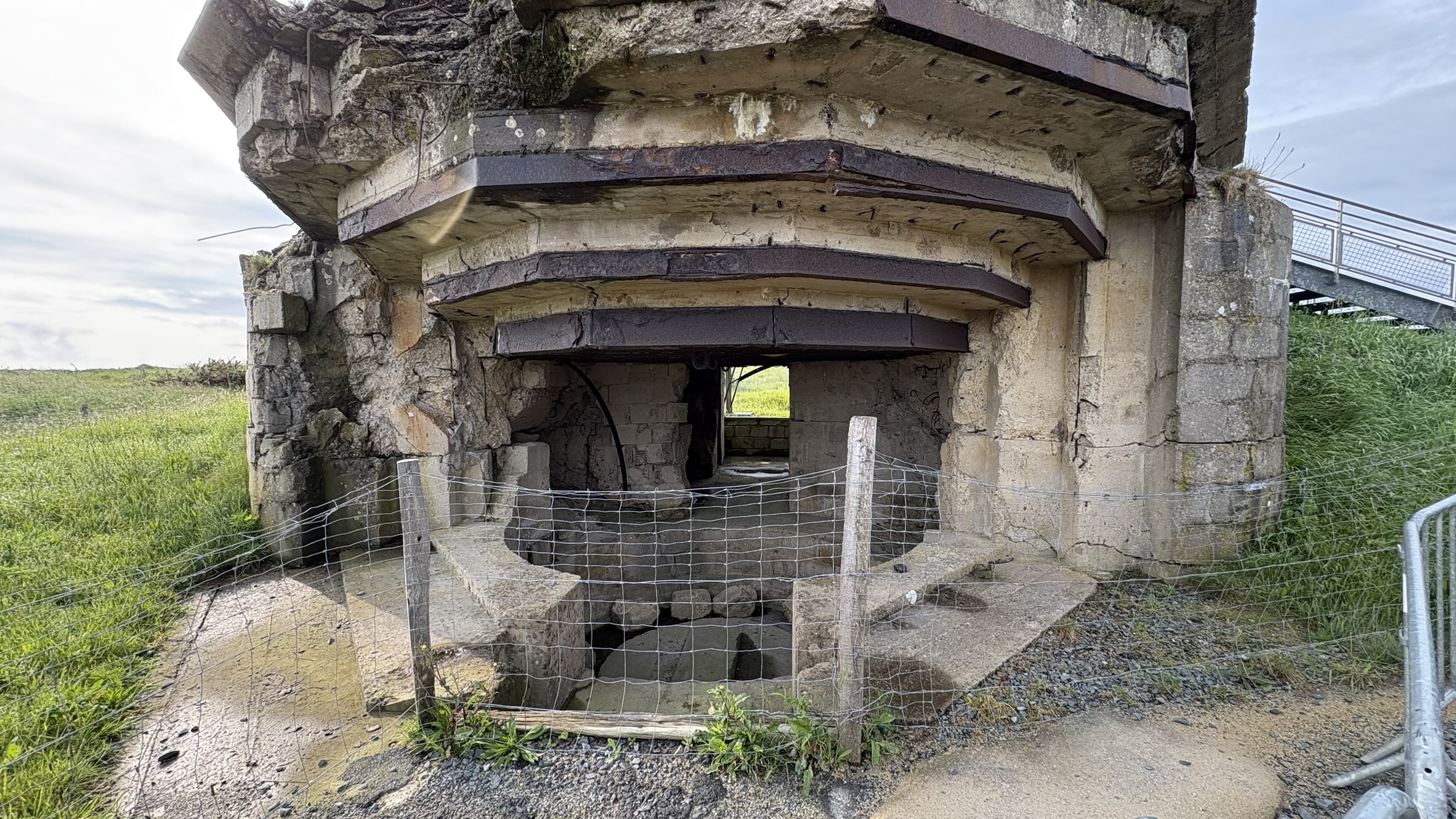
Frightening looking gun enplacement which was probably not a threat to anybod because Point Du Hoc did not unfol as expected. No artillery there but was a fierce infantry fight that the Rangers were close to losing. Had to get backup from the Omaha Beach.
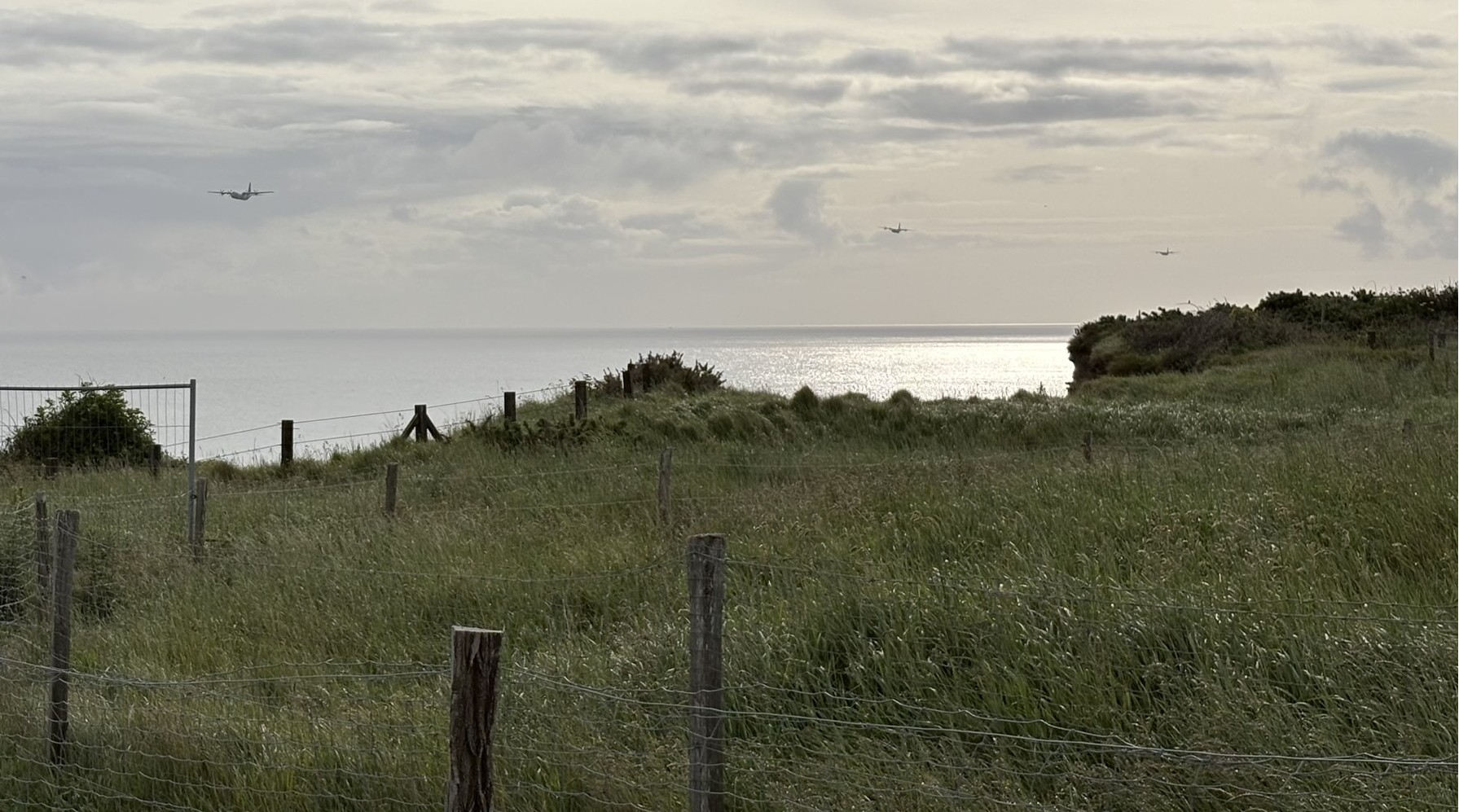
From Pointe Du Hoc, this photo was basically to get the 3 US planes making their prescence known.
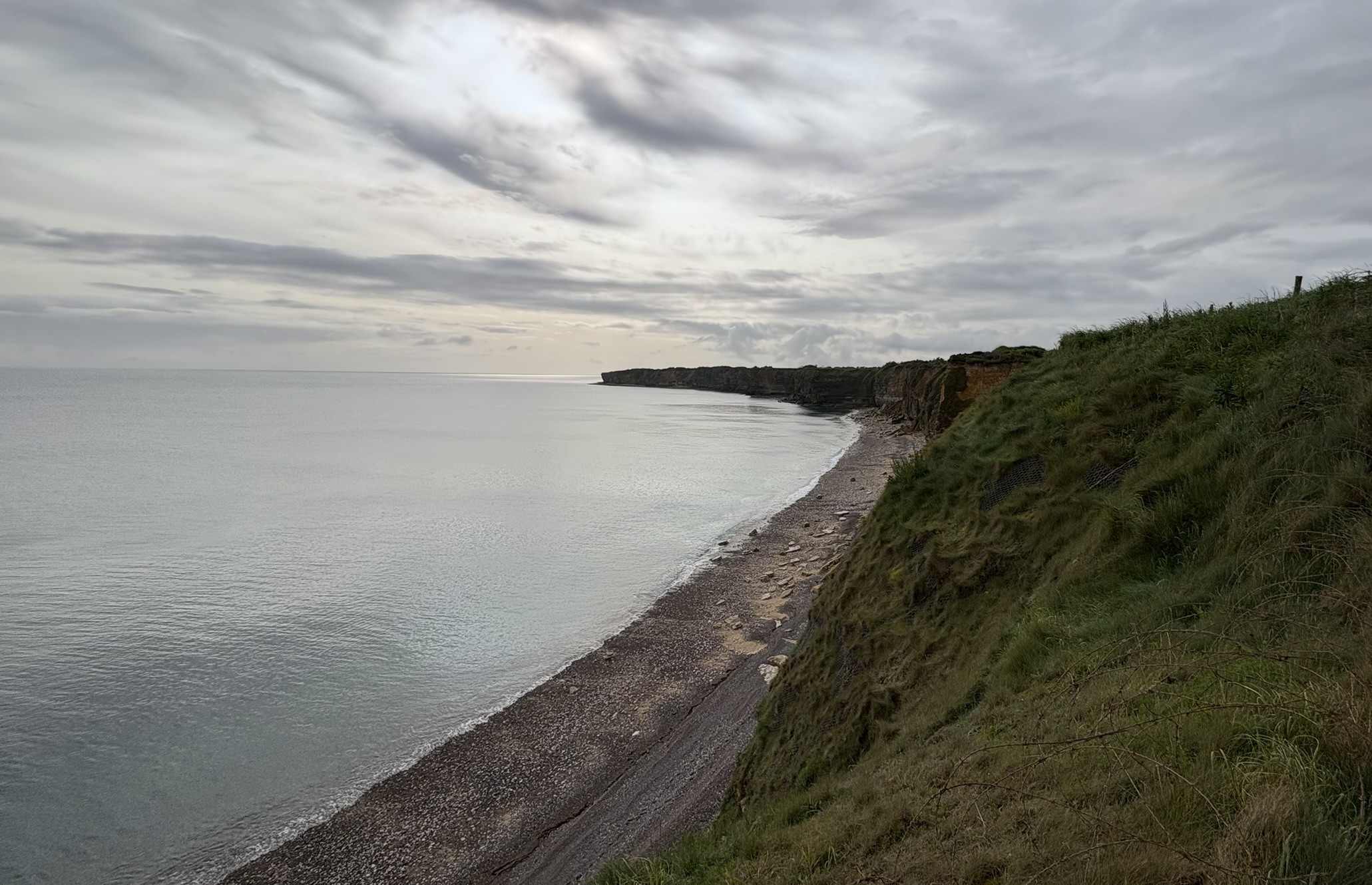
From Pointe Du Hoc, This is looking East towards Omaha where the real action was.
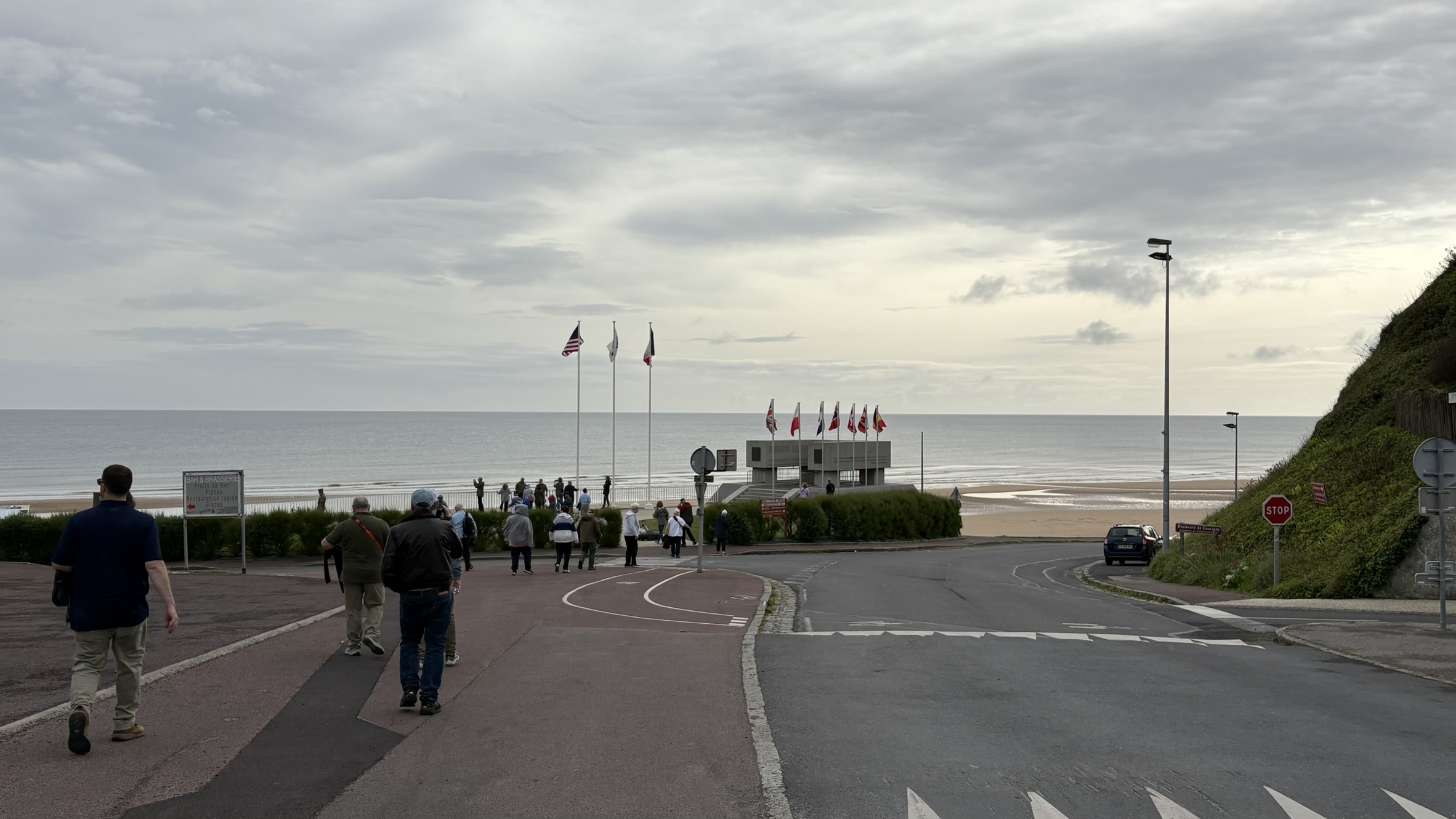
Finally we get to Omaha Beach where the US army faced hell. This was the most devestating & injurious place of suffering during the invasion. This was the far western side of US assault by 2nd & 5th Rangers as well as small part of 29th ID. One of the early & successful exits from Omaha beach.
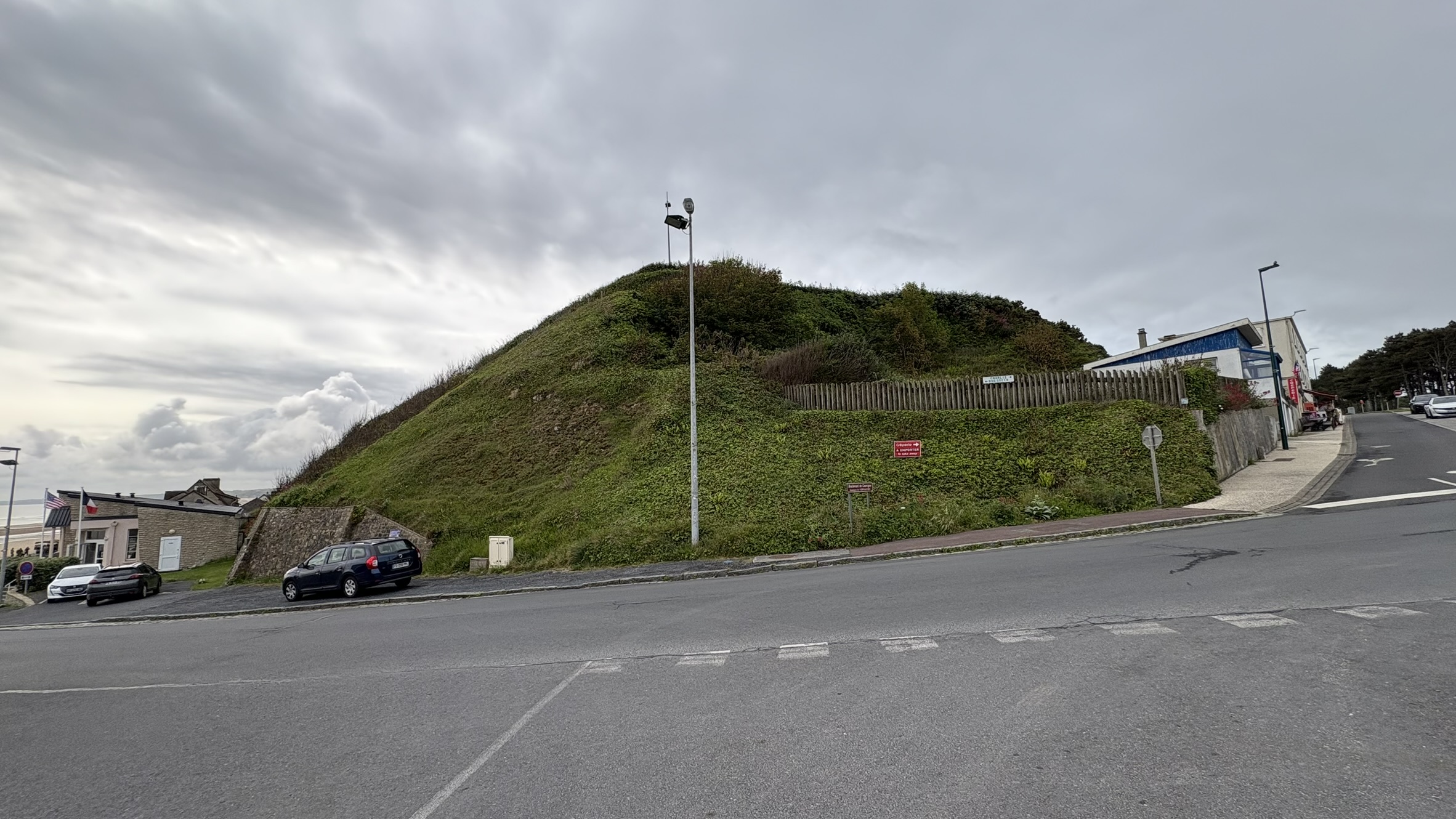
One can see the protection afforded the defenders as they looked down the beaches from the heights.
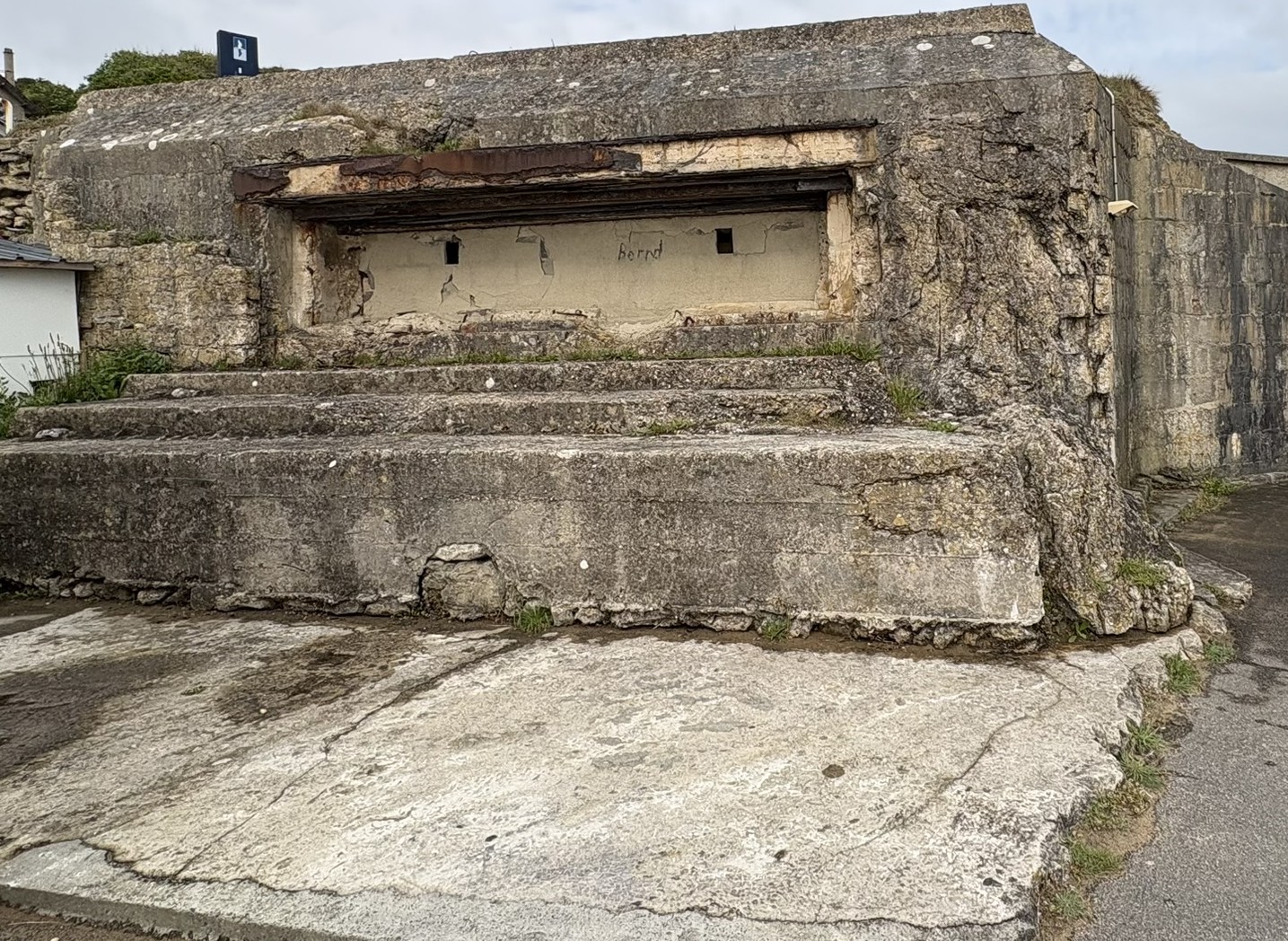
Ugly looking pilbox still standing but look at the direction; Setup for crossfire which is demonstrated in photo #20 too. Amazing the lengths the Germans went to protect the coast. Normandy was not considereed by the Germans as the best place for allies to attack because of distance from UK, relatively small beaches & tide issues; yet they fortified & scarred another country’s beaches, forever.
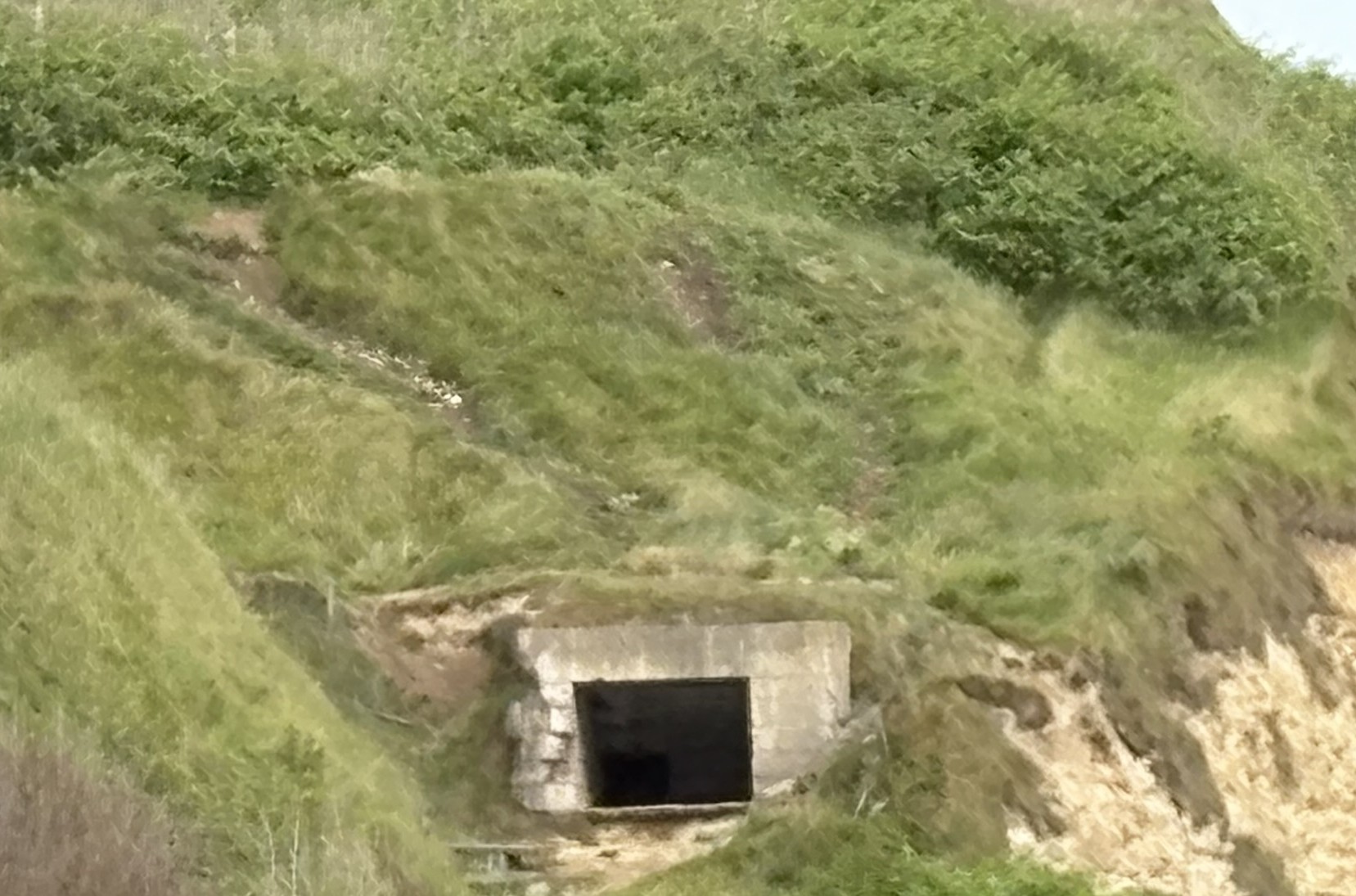
This is further West from photo #19 again utiilizing crossfire. Just below on beach is an active campsite & a casino nearby
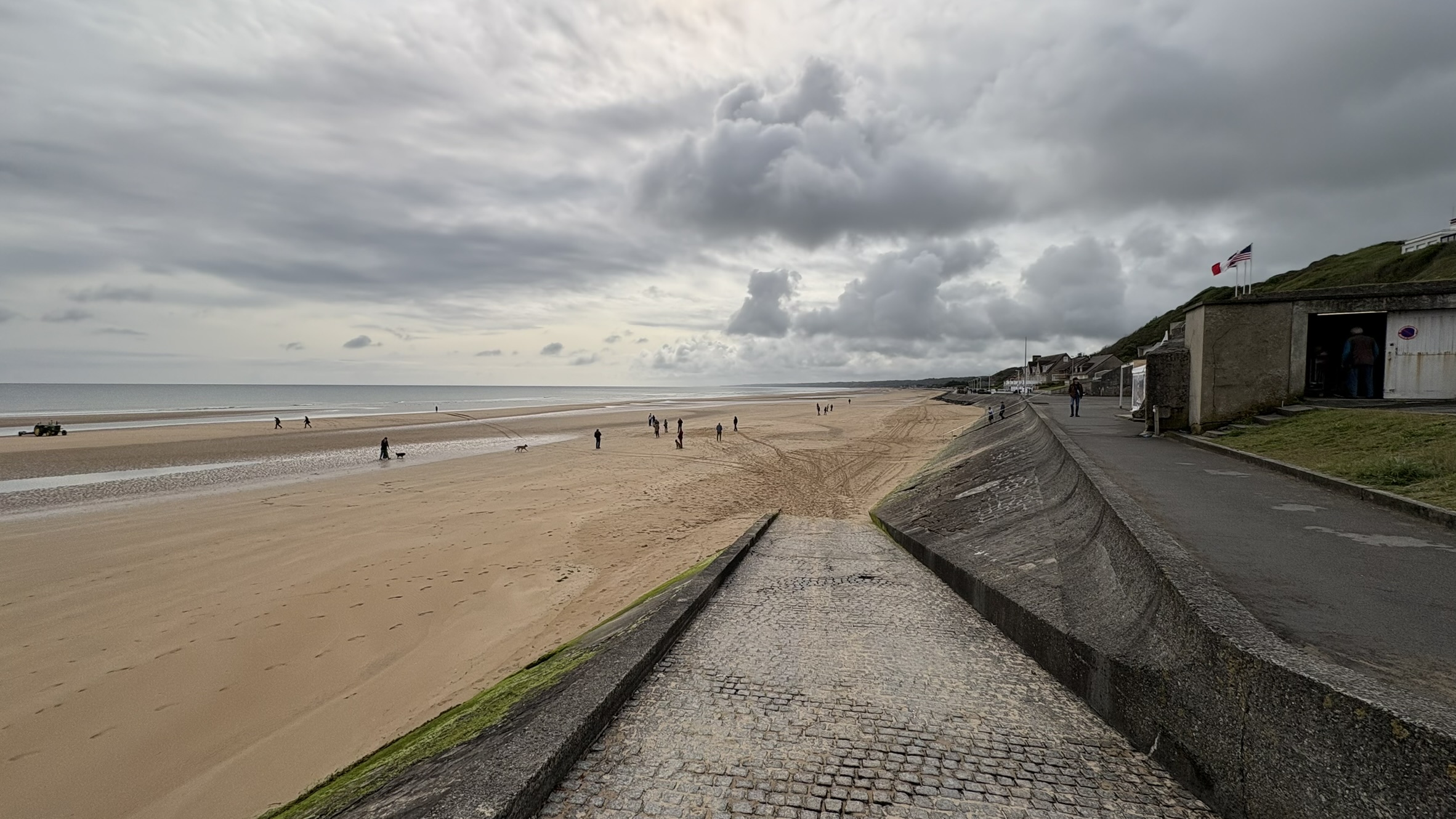
This is looking East down beach where most of the carnage unfolded. 2400 US sodiers from the US 1 & 29 ID died on the beaches June 6 compared to 197 on Utah. Maybe they should’ve found a way to drop airborne behind Omaha too?
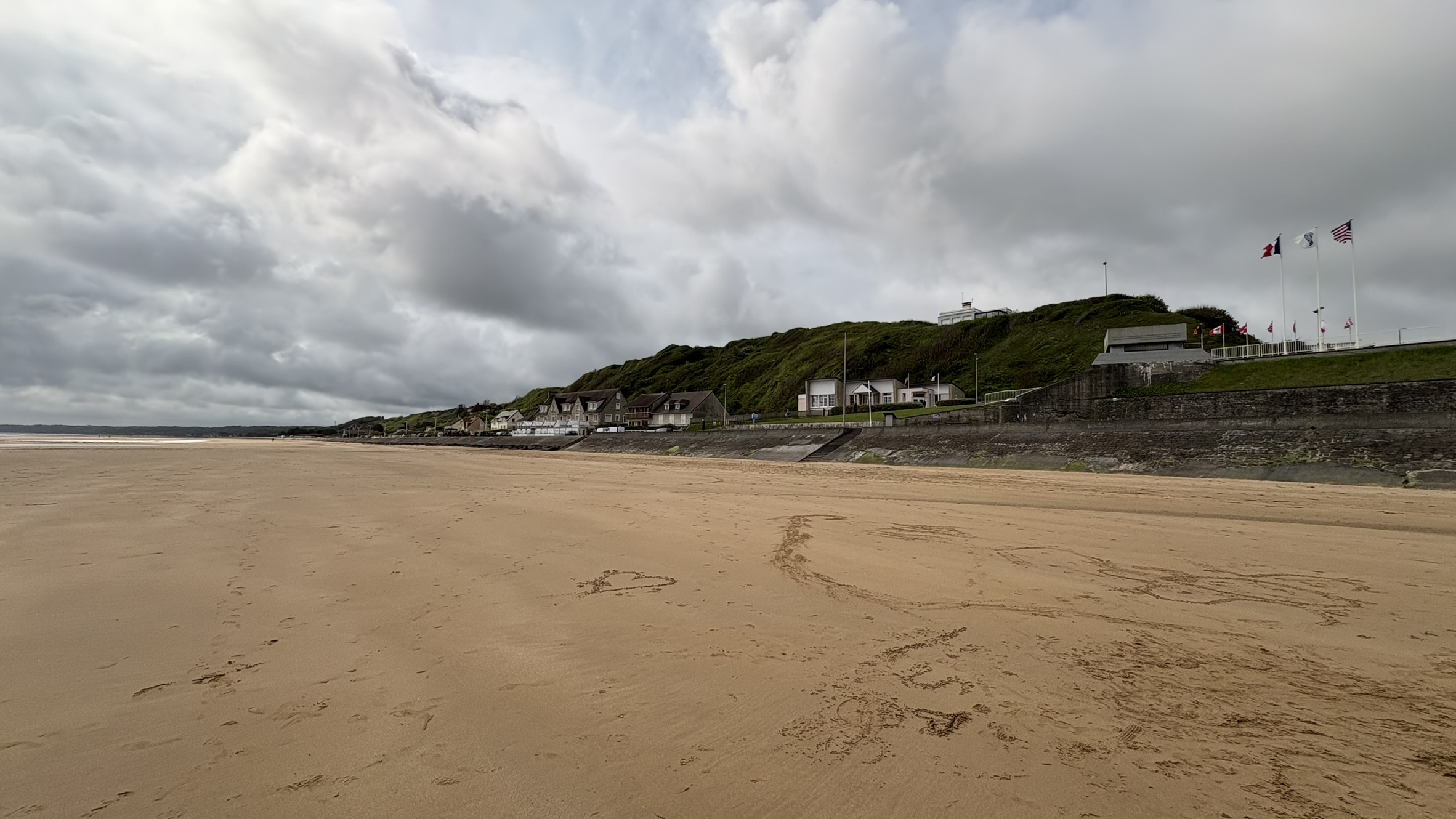
Another look from a different angle of the terrain facing the soldiers. Just beyonf that House & flags was the famous Exit D-1. Also notice the wall where the soldiers congregated before they started accessing the high ground.
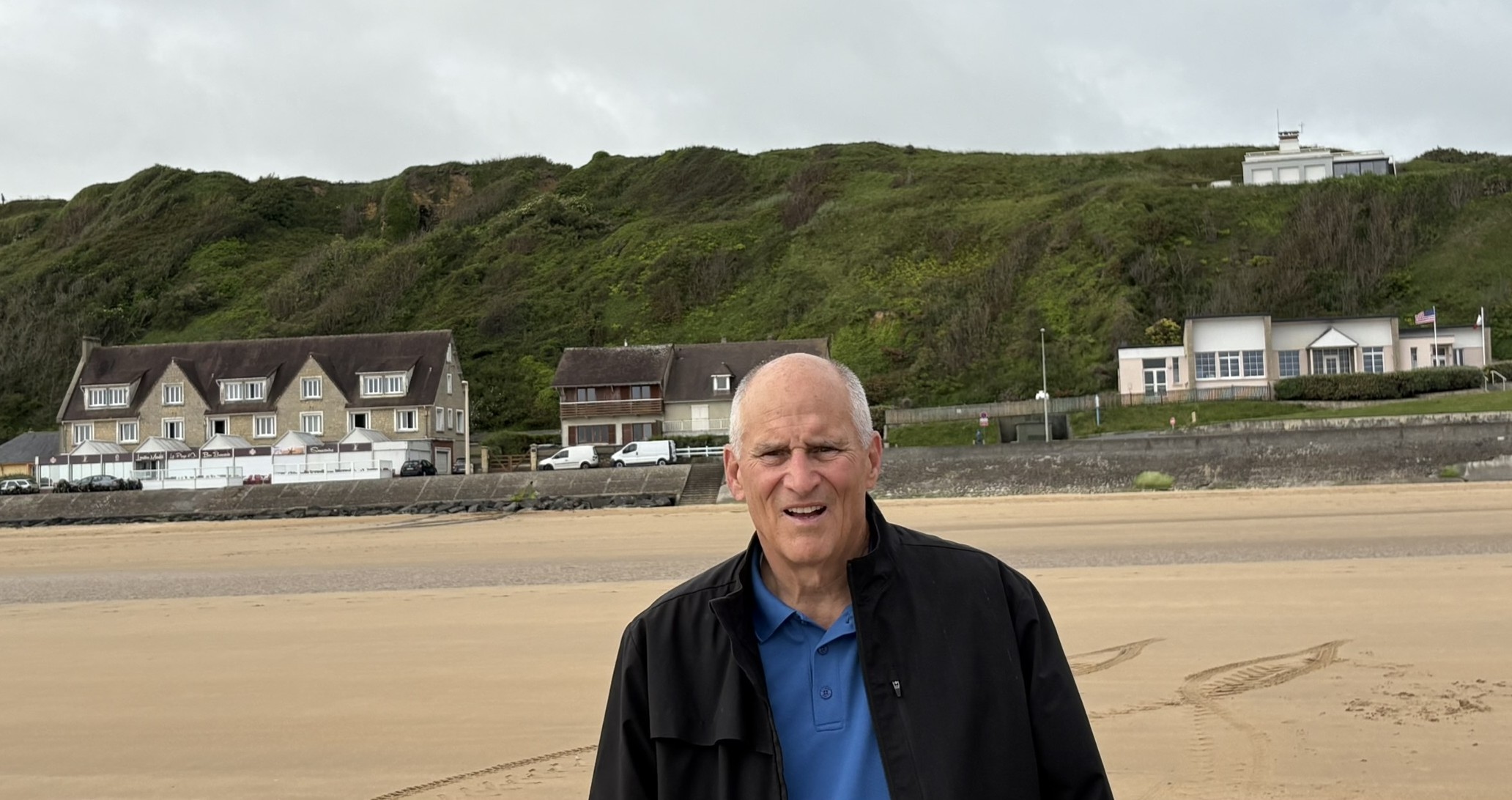
Group friend asked if I wanted a picture on Omaha beach that happened to be just east of exit D-1 the only hard surfaced exit. I might’ve stood in front of this for history? Company A of the 116th Regimental Combat Team, 29th Infantry Division lost all but 1 officer & half the enlisted in first few minutes there. You can see the high ground behind me that was loaded with German machine guns.
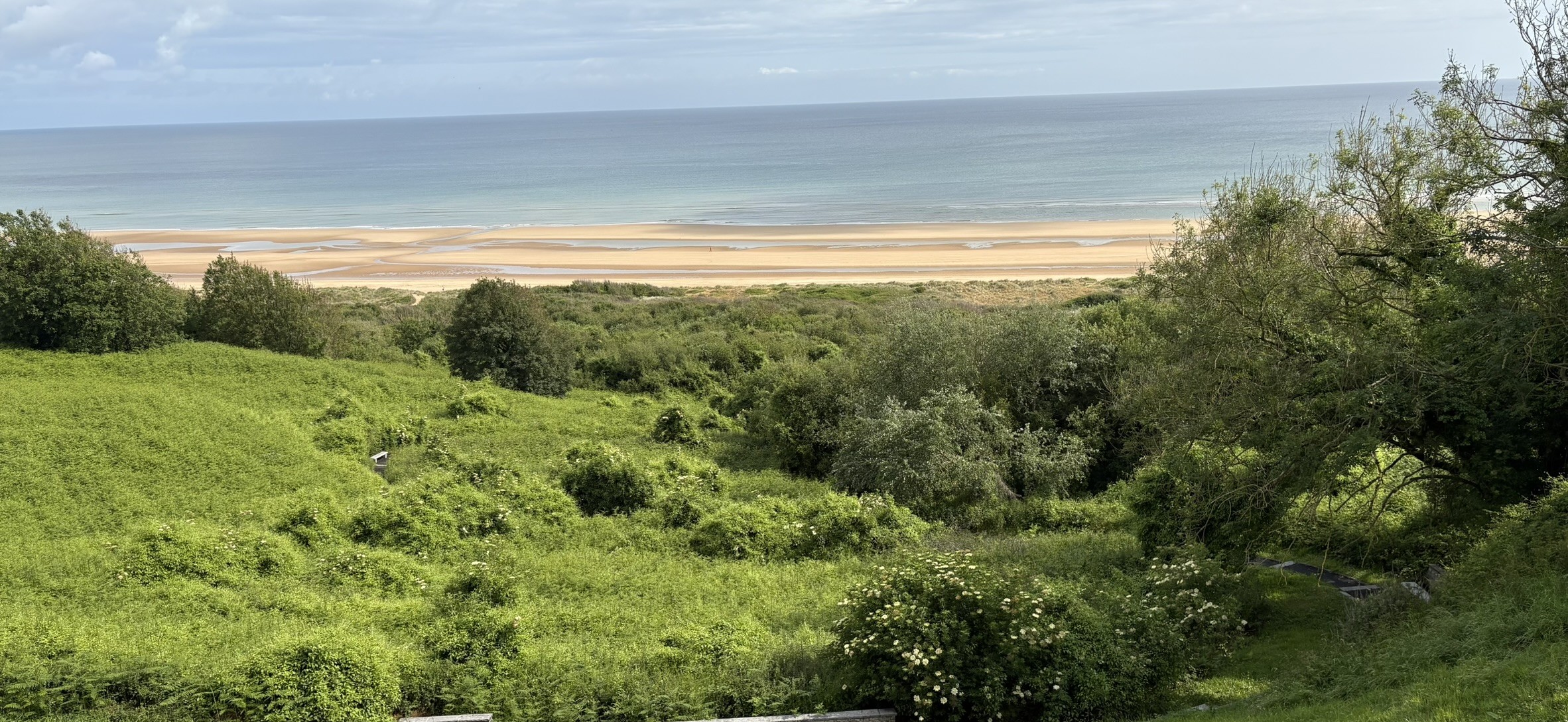
This is looking down the beach at Les Moulins on the Eastern path to US Cemetary. Just west of June 6th exit 2 from Omaha Beach. Don’t think anybody made it up right here according to map. https://www.emersonkent.com/images/d_day_omaha.jpg. The hero from East Brunswick Sgt Streczyk’s infiltration was further east on Easy Red: https://www.youtube.com/watch?v=xNlsVC70mJQ
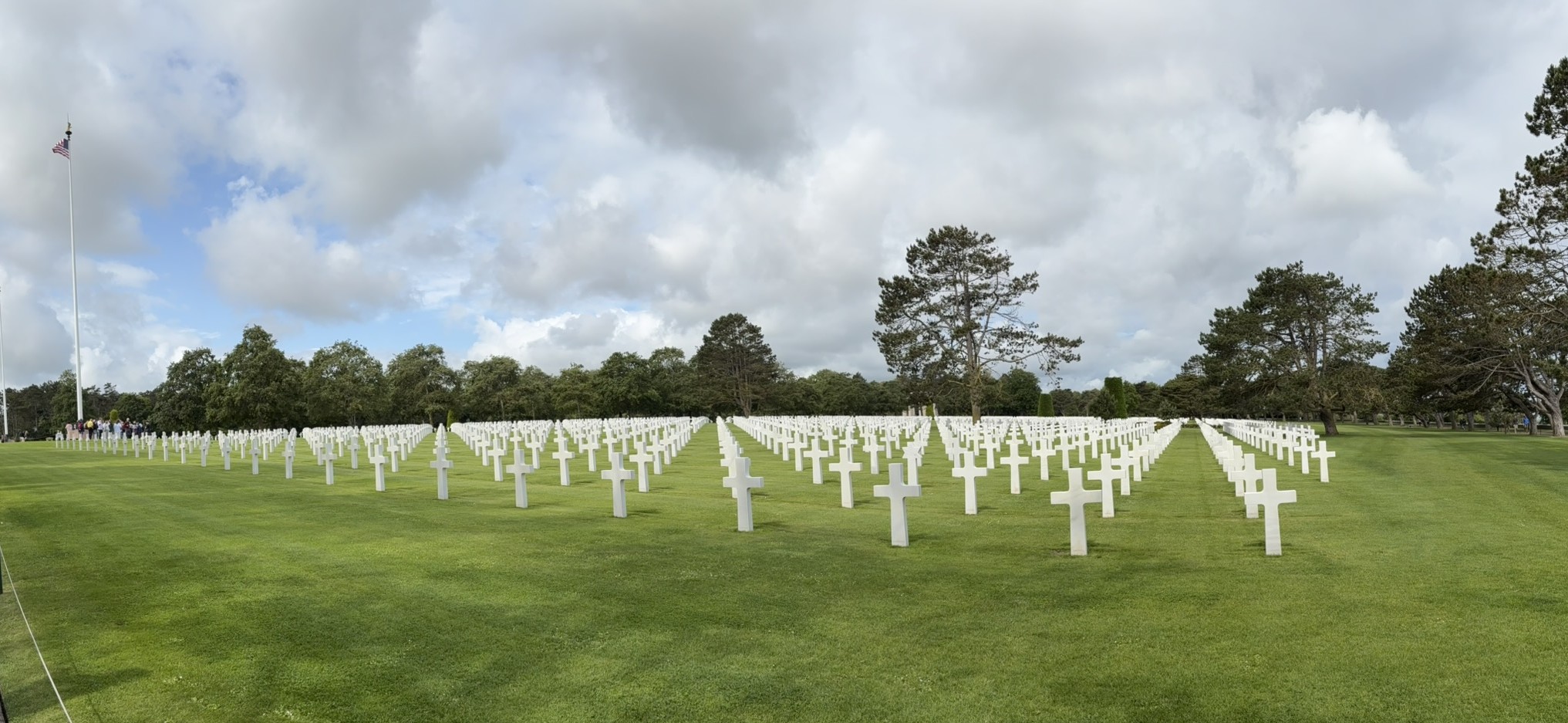
The Normandy American Cemetery and Memorial in Colleville-sur-Mer, France contains 9,388 graves of U.S. military personnel who died during the D-Day landings and subsequent operations in World War II including 307 Unknowns & 1557 names inscribed on Walls because they were never recovered. This is not only soldiers dying in Normandy. I would speculate that it was those who died in France because there are cemetaries in Belgium, Netherlands & Luxembourg. All soldiers families were given the option & approx 60% chose repatriation of their deceased soldier. Hosting countries honor our dead service people with some very beautiful & touching places. & showed up during these remeberances 80 years later.
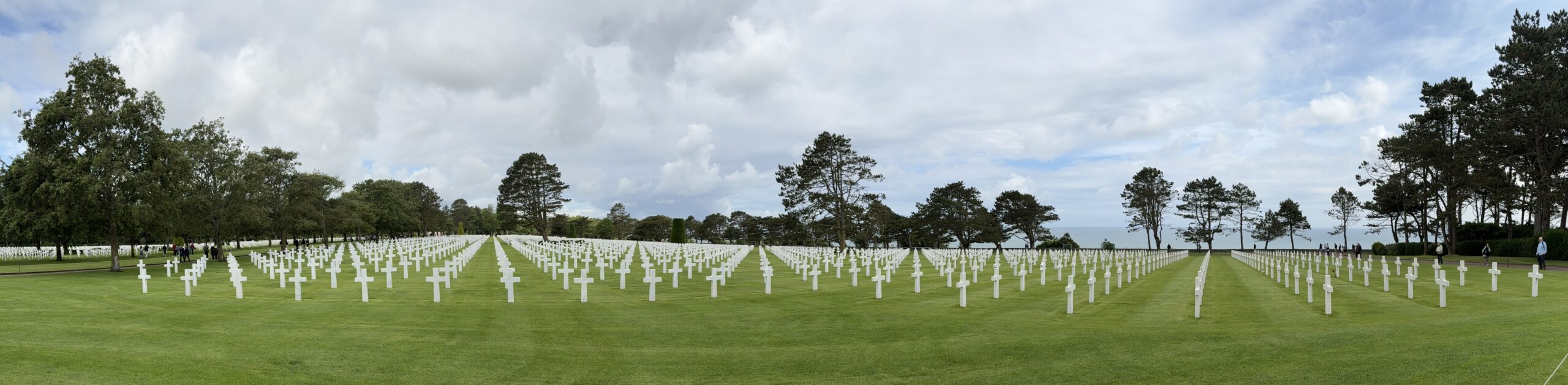
These pictures do not include people but there were alot of people in the area. Maybe I pointed at empty areas for a reason.
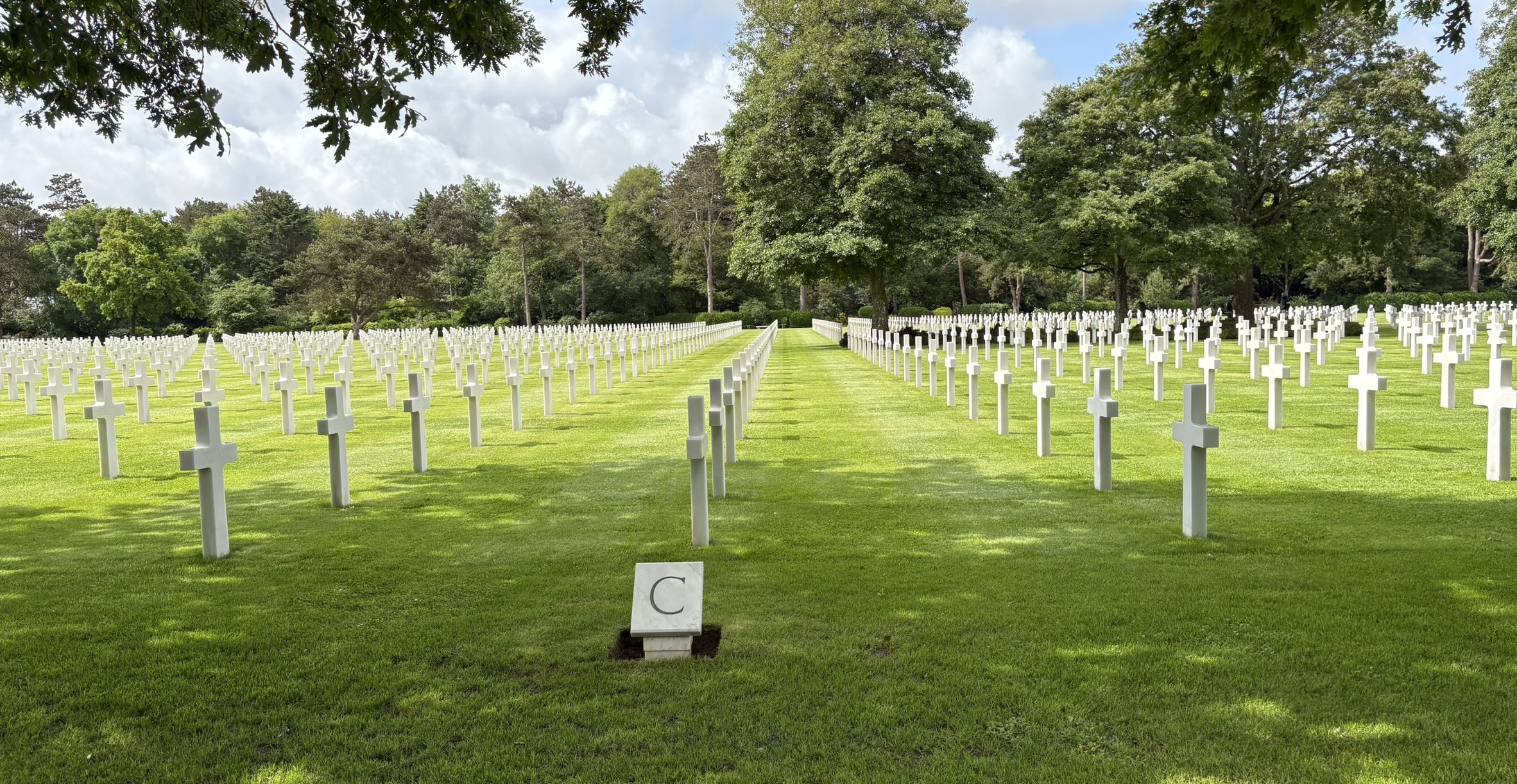
While we were in Normandy, there was alot of prep for June 6 ceremonies. We visited 3 major cemetaries & numerous smaller ones. Historian would usually say a few words of 2 or 3 decesased 502nd soldiers at each major Cemetary.
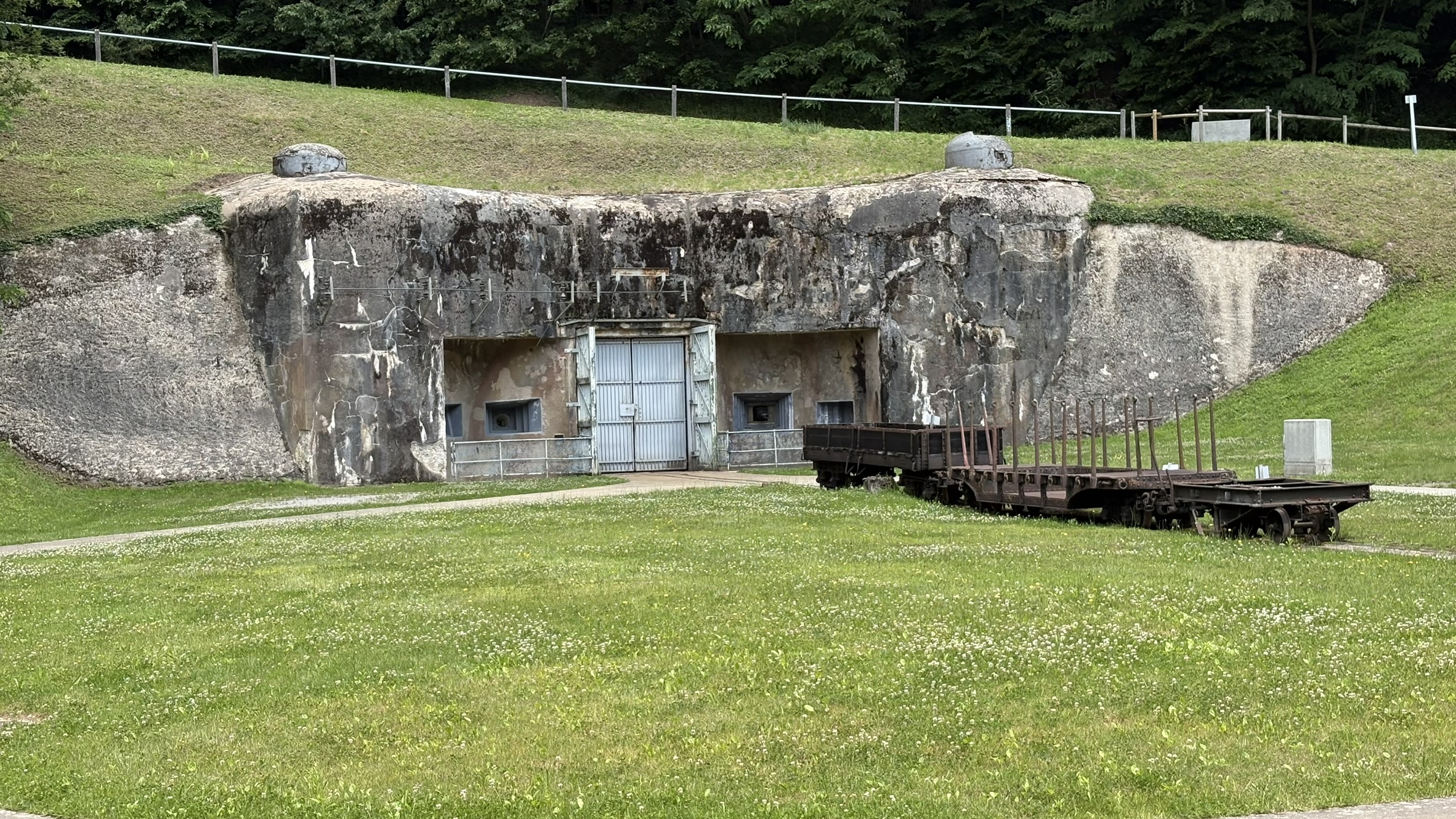
On the way from Luxembourg to Germany on June 9th we toured a Maginot Line facility Ft Simserhof near Strasbourg in Alsace Lorraine with a French military museum co-located. It was fascinating. France was devestated in WW I, but still shared the East Border with Germany; it wanted to manage the German aggresivenss again by building a series of strategic forts which are still considerd an engineering marvel, but unfortunately a strategic failure. Alsace Lorraine had changed sides between Germany & France during multiple wars. Very sensitive area to French. We had an hour long tour of underground facillities that are still minimally maintained. Maginot Line was built to be totaly self sufficient. I believe that the French soldiers were deployed inside the fort for 9 months & only surrenderd voluntarily after the armistice was signed. Notice the gun emplacemts on top. This location is BTW the backside; the fighting side is on other side which we did not see.
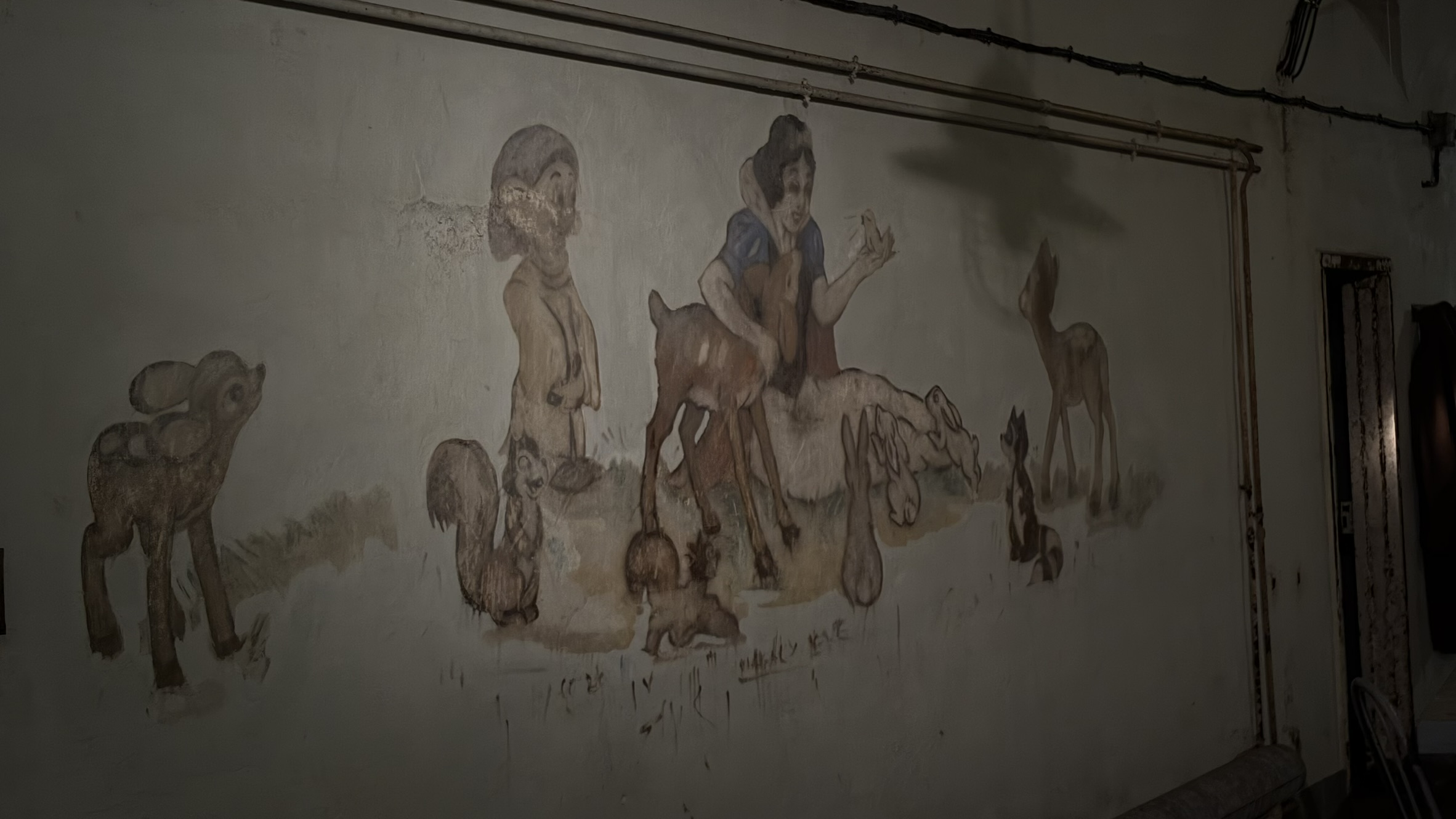
This was like a self-contained city. Lifestyle rooms: Dental, medical, baking, recreation area, etc. Here is the rec room where they played cards, drank wine, etc. I guess being cooped up for 9 months they also painted murals throughout room of disney characters. I have alot of pictures but you get the point. It is remarkable. https://www.cc-paysdebitche.fr/tourisme-culture-sport/le-simserhof/
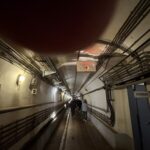
Here is the group walking in corridor just passing the infirmary.
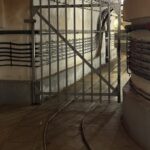
Not only built to slow down the Germans, the forts needed support utilities like electricity, breathing support, etc.
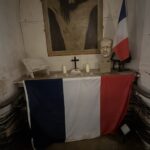
Back wall of a Rec room. Interesting juxtaposition of French nationalist symbols & Jesus Christ on the cross. Gives you an idea of how this was built for the long-term but unfortunately did not work. Who can blame the French after the carnage of WWI, trying to protect themselves against hostile neighbors with advanced technology rather than their young generation.